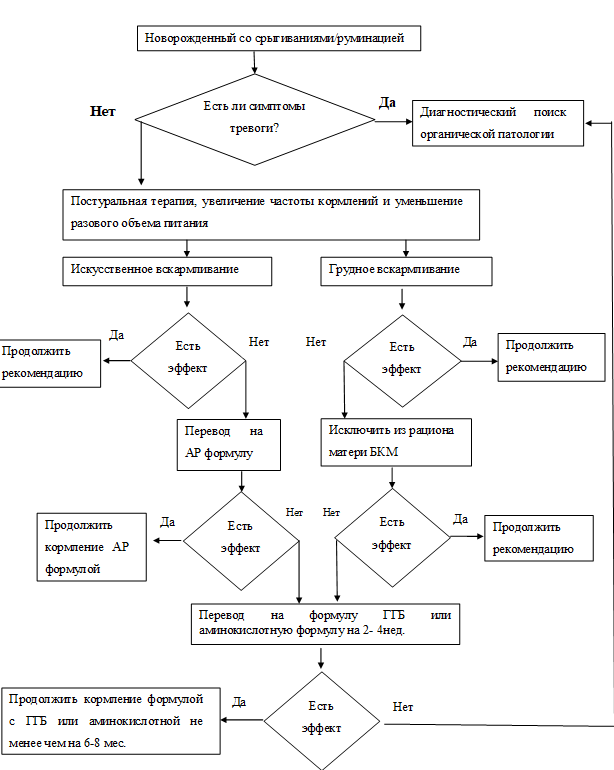
Бельмер С.В., Хавкин А.И. П.Д.В. Функциональные нарушения органов пищеварения у детей Принципы диагностики и лечения. ГЭОТАР-Мед. Москва, 2018. 1–15 p.
American Psychiatric Association: Diagnostic and Statistical Manual of Mental Disorders, Fifth Edition: DSM-5-TR. Washington, DC : American Psychiatric Association Publishing, 2022. 1924 p.
Drossman D.A. H.W.L. Rome IV - Functional GI disorders: Disorders of gut-brain interaction // Gastroenterology. AGA Institute, 2016. Vol. 150, № 6. P. 1257–1261.
Rosen R., Vandenplas Y. S.M. Pediatric Gastroesophageal Reflux Clinical Practice Guidelines: Joint Recommendations of the North American Society for Pediatric Gastroenterology, Hepatology, and Nutrition (NASPGHAN) and the European Society for Pediatric Gastroenterology, Hepatology, a // J. Pediatr. Gastroenterol. Nutr. 2018. Vol. 66, № 3. P. 516–554.
Kusnik A V.S. Rumination Disorder In: StatPearls [Internet]. // Treasure Isl. StatPearls Publ. 2024. Vol. Jan.2023 M.
Vandenplas, Y., Alturaiki M.A., Al-qabandi W., Alrefaee F. Middle East Consensus Statement on the Diagnosis and // Pediatr. Gastroenterol. Hepatol. Nutr. 2016. Vol. 19, № 3. P. 153–161.
ФГАУ “НМИЦ здоровья детей” МЗ РФ. Программа оптимизации вскармливания детей первого года жизни в Российской Федерации: методические рекомендации. 2019. 112 p.
Бельмер С.В. et al. Функциональные расстройства органов пищеварения у детей. 2021. 64 p.
Farahmand F. et al. Cow’s milk allergy among children with gastroesophageal reflux disease // Gut Liver. 2011. Vol. 5, № 3. P. 298–301.
Vandenplas Y. et al. Practical algorithms for managing common gastrointestinal symptoms in infants // Nutrition. Elsevier Inc., 2013. Vol. 29, № 1. P. 184–194.
Bi D. et al. Neonatal risk factors for functional gastrointestinal disorders in preterm infants in the first year of life // Turk. J. Pediatr. 2023. Vol. 65, № 6. P. 919–930.
Gondim M.M.B.B., Goulart A.L., de Morais M.B. Prematurity and functional gastrointestinal disorders in infancy: a cross-sectional study // Sao Paulo Med. J. 2022. Vol. 140, № 4. P. 540–546.
Aydemir Y. et al. Screening for functional gastrointestinal disorders in preterm infants up to 12 months of corrected age: a prospective cohort study // Eur. J. Pediatr. Springer Berlin Heidelberg, 2024. Vol. 183, № 5. P. 2091–2099.
Heacock H.J. et al. Influence of breast versus formula milk on physiological gastroesophageal reflux in healthy, newborn infants // J. Pediatr. Gastroenterol. Nutr. 1992. Vol. 14. P. 41–46.
Van Den Driessche M., Peeters K., Marien P., Ghoos Y., Devlieger H., Veereman-Wauters G. Gastric emptying in formula-fed and breast-fed Infants measured with the 13C-octanoic acid breath test. // Pediatr. Gastroenterol. Nutr. 1999. Vol. 29. P. 46–51.
Cavataio F. et al. Clinical and pH-metric characteristics of gastro-oesophageal reflux secondary to cows’ milk protein allergy // Arch. Dis. Child. 1996. Vol. 75, № 1. P. 51–56.
Milocco C., Torre G. V.A. Gastro-oesophageal reflux and cows’ milk protein allergy // Arch. Dis. Child. 1997;77183–188. 1997. Vol. 77. P. 183–184.
Malcolm A. et al. Rumination syndrome // Mayo Clin. Proc. 1997. Vol. 72, № 7. P. 646–652.
Chahuan J., Rey P., Monrroy H. Rumination syndrome. A review article // Rev. Gastroenterol. México (English Ed. Asociación Mexicana de Gastroenterología, 2021. Vol. 86, № 2. P. 163–171.
Halland M. et al. Diaphragmatic breathing for rumination syndrome: Efficacy and mechanisms of action // Neurogastroenterol. Motil. 2016. Vol. 28, № 3. P. 384–391.
Tack J. et al. Review article: The pathophysiology, differential diagnosis and management of rumination syndrome // Aliment. Pharmacol. Ther. 2011. Vol. 33, № 7. P. 782–788.
Barba E. et al. Biofeedback-guided control of abdominothoracic muscular activity reduces regurgitation episodes in patients with rumination // Clin. Gastroenterol. Hepatol. Elsevier, Inc, 2015. Vol. 13, № 1. P. 100-106.e1.
Chew K. et al. Low prevalence of infantile functional gastrointestinal disorders (FGIDs) in a multi-ethnic Asian population // Pediatr. Neonatol. Elsevier Taiwan LLC, 2021. Vol. 62, № 1. P. 49–54.
Robin S.G. et al. Prevalence of Pediatric Functional Gastrointestinal Disorders Utilizing the Rome IV Criteria // J. Pediatr. Elsevier Inc., 2018. Vol. 195. P. 134–139.
Van Tilburg M.A.L. et al. Prevalence of functional gastrointestinal disorders in infants and toddlers // J. Pediatr. Elsevier Inc, 2015. Vol. 166, № 3. P. 684–689.
Campanozzi A. et al. Prevalence and natural history of gastroesophageal reflux: Pediatric prospective survey // Pediatrics. 2009. Vol. 123, № 3. P. 779–783.
Шиляев Р.Р., Петрова О.А., Копилова Е.Б. Синдром срыгиваний и и рвоты у детей раннего возраста Соврем. подходы к диагностике и лечению Учеб.-метод. пособие для студентов мед. вузов / ed. ИГМА. Иваново, 2001. 63 p.
Rajindrajith S., Devanarayana N.M., Crispus Perera B.J. Rumination syndrome in children and adolescents: A school survey assessing prevalence and symptomatology // BMC Gastroenterol. BMC Gastroenterology, 2012. Vol. 12, № 1. P. 1.
Palsson O.S. et al. Development and validation of the Rome IV diagnostic questionnaire for adults // Gastroenterology. Elsevier, Inc, 2016. Vol. 150, № 6. P. 1481–1491.
Murray H.B. et al. Prevalence in primary school youth of pica and rumination behavior: The understudied feeding disorders // Int. J. Eat. Disord. 2018. Vol. 51, № 8. P. 994–998.
Koloski N.A., Talley N.J., Boyce P.M. Epidemiology and health care seeking in the functional GI disorders: A population-based study // Am. J. Gastroenterol. 2002. Vol. 97, № 9. P. 2290–2299.
Hartmann A.S. et al. Prevalence of pica and rumination behaviors in German children aged 7–14 and their associations with feeding, eating, and general psychopathology: a population-based study // Eur. Child Adolesc. Psychiatry. Springer Berlin Heidelberg, 2018. Vol. 27, № 11. P. 1499–1508.
Murray H.B. et al. Diagnosis and Treatment of Rumination Syndrome: A Critical Review // American Journal of Gastroenterology. 2019. Vol. 114, № 4. 562–578 p.
Alcala-Gonzalez L.G., Serra X., Barba E. Gastroenterología y Hepatología. 2022. Vol. 45. P. 155–163.
Vandenplas Y. et al. A proposition for the diagnosis and treatment of gastro-oesophageal reflux disease in children: A report from a working group on gastro-oesophageal reflux disease // Eur. J. Pediatr. 1993. Vol. 152, № 9. P. 704–711.
Захарова И.Н., Сугян Н.Г., Пыков М.И. Синдром срыгивания у детей раннего возраста : диагностика и коррекция // Эффективная фармакотерапия. 2014. Vol. 3. P. 18–28.
O’Brien M.D., Bruce B.K., Camilleri M. The rumination syndrome: Clinical features rather than manometric diagnosis // Gastroenterology. 1995. Vol. 108, № 4. P. 1024–1029.
Stanghellini V. et al. Gastroduodenal disorders // Gastroenterology. Elsevier, Inc, 2016. Vol. 150, № 6. P. 1380–1392.
Vijayvargiya P. et al. Novel association of rectal evacuation disorder and rumination syndrome: Diagnosis, comorbidities, and treatment // United Eur. Gastroenterol. J. 2014. Vol. 2, № 1. P. 38–46.
Koppen I.J.N. et al. The pediatric Rome IV criteria: what’s new? // Expert Rev. Gastroenterol. Hepatol. Taylor & Francis, 2017. Vol. 11, № 3. P. 193–201.
Wien M.A. et al. Patterns of brain injury in newborns treated with extracorporeal membrane oxygenation // Am. J. Neuroradiol. 2017. Vol. 38, № 4. P. 820–826.
Hyams J., Ricci J. L.A. Clinical and laboratory correlates of esophagitis in young children // Pediatr. Gastroenterol. Nutr. 1988. Vol. 7, № 52.
Gonzalez Ayerbe J.I. et al. Diagnosis and management of gastroesophageal reflux disease in infants and children: From guidelines to clinical practice // Pediatr. Gastroenterol. Hepatol. Nutr. 2019. Vol. 22, № 2. P. 107–121.
Duncan D.R., Amirault J., Mitchell P. Oropharyngeal Dysphagia is Strongly Correlated With Apparent Life-Threatening Events // Pediatr. Gastroenterol. Nutr. 2017. Vol. 65, № 2. P. 168–172.
Weir K.A. et al. Oropharyngeal aspiration and silent aspiration in children // Chest. The American College of Chest Physicians, 2011. Vol. 140, № 3. P. 589–597.
Weir K. et al. Clinical signs and symptoms of oropharyngeal aspiration and dysphagia in children // Eur. Respir. J. 2009. Vol. 33, № 3. P. 604–611.
Tucker E. et al. Rumination variations: Aetiology and classification of abnormal behavioural responses to digestive symptoms based on high-resolution manometry studies // Aliment. Pharmacol. Ther. 2013. Vol. 37, № 2. P. 263–274.
Kessing B.F., Bredenoord A.J., Smout A.J.P.M. Objective manometric criteria for the rumination syndrome // Am. J. Gastroenterol. 2014. Vol. 109, № 1. P. 52–59.
Rosen R., Rodriguez L., Nurko S. Pediatric rumination subtypes: A study using high-resolution esophageal manometry with impedance // Neurogastroenterol. Motil. 2017. Vol. 29, № 5. P. 1–9.
Singendonk M.M.J. et al. Objectively diagnosing rumination syndrome in children using esophageal pH-impedance and manometry // Neurogastroenterol. Motil. 2017. Vol. 29, № 5. P. 1–8.
Grunder F., Aspirot A., Faure C. High Resolution Esophageal Manometry Patterns in Children and Adolescents with Rumination Syndrome // J. Pediatr. Gastroenterol. Nutr. 2017. Vol. 65, № 3. P. 289–292.
Неонатология. Национальное руководство под ред. Н.Н. Володина, Д.Н. Дегтярева. ГЭОТАР-Мед. Москва, 2023. Т.2-768 p.
Bellaiche M. et al. Digestive Tolerance and Safety of an Anti-Regurgitation Formula Containing Locust Bean Gum, Prebiotics and Postbiotics: A Real-World Study // Pediatr. Gastroenterol. Hepatol. Nutr. 2023. Vol. 26, № 5. P. 249–265.
Salvatore S. et al. Tolerance and Safety of an Anti-Regurgitation Formula Containing Locust Bean Gum, Pre-, and Postbiotics: A Multi-Country Multi-Center Prospective Randomized Controlled Study in Infants with Regurgitation // Nutrients. 2024. Vol. 16, № 889. P. 1–13.
Приворотский В.Ф., Луппова Н.Е., Бельмер С.В. Рабочий протокол диагностики и лечения гастроэзофагальной рефлюксной болезни у детей (1-я часть). // Вопросы детской диетологии. 2015. Vol. 13, № 1. P. 70–74.
Moon R.Y. et al. SIDS and other sleep-related infant deaths: Evidence base for 2016 updated recommendations for a safe infant sleeping environment // Pediatrics. 2016. Vol. 138, № 5.
Corvaglia L. et al. Extensively hydrolyzed protein formula reduces acid gastro-esophageal reflux in symptomatic preterm infants // Early Hum. Dev. Elsevier Ltd, 2013. Vol. 89, № 7. P. 453–455.
Salvatore S. et al. Review shows that parental reassurance and nutritional advice help to optimise the management of functional gastrointestinal disorders in infants // Acta Paediatr. Int. J. Paediatr. 2018. Vol. 107, № 9. P. 1512–1520.
Lightdale J.R. et al. Gastroesophageal reflux: Management guidance for the pediatrician // Pediatrics. 2013. Vol. 131, № 5.
Puntis J.W. Gastro-oesophageal reflux in young babies: Who should be treated? // Arch. Dis. Child. 2015. Vol. 100, № 10. P. 989–993.
Tighe M. et al. Pharmacological treatment of children with gastro-oesophageal reflux // Cochrane Database Syst. Rev. 2014. Vol. 2014, № 11.
Carabelli G. et al. Study on Nocturnal Infant Crying Evaluation (NICE) and Reflux Disease (RED) // Children. 2024. Vol. 11, № 4. P. 1–12.
Fernández-González S.M., Moreno-Álvarez A., Solar-Boga A. Proton Pump Inhibitors in Pediatric Gastroesophageal Reflux Disease: A Systematic Review of Randomized Controlled Trials // Children. 2024. Vol. 11, № 3.
Health N.C.C. for W. and C. Gastro-oesophageal reflux disease: recognition, diagnosis and management in children and young people // NICE Guideline, National Institute for Health and Care Excellence. London, 2015. № January.
Tighe M.P. et al. Current Pharmacological Management of Gastro-Esophageal Reflux in Children // Pediatr. Drugs. 2009. Vol. 11, № 3. P. 185–202.
Van Der Pol R.J. et al. Efficacy of proton-pump inhibitors in children with gastroesophageal reflux disease: A systematic review // Pediatrics. 2011. Vol. 127, № 5. P. 925–935.
Baldassarre M.E. et al. Magnesium alginate in gastro-esophageal reflux: A randomized multicenter cross-over study in infants // Int. J. Environ. Res. Public Health. 2020. Vol. 17, № 1. P. 1–9.
Foster J.P. et al. Probiotics for preventing and treating infant regurgitation: A systematic review and meta-analysis // Matern. Child Nutr. 2022. Vol. 18, № 1. P. 1–15.
García-Santos J.A. et al. Impact of Probiotics on the Prevention and Treatment of Gastrointestinal Diseases in the Pediatric Population // Int. J. Mol. Sci. 2023. Vol. 24, № 11. P. 1–29.
Martin J.A. et al. Natural history and familial relationships of infant spilling to 9 years of age // Pediatrics. 2002. Vol. 109, № 6. P. 1061–1067.
Новопольцева Е.Г., Воробьева В.А., Овсянникова О.Б. [и др.] Формирование патологии желудочно-кишечного тракта у недоношенных детей при внутриутробных инфекциях / Вопросы детской диетологии. – 2014. – Т. 12, № 6. – С. 24-30.
Шестак Е.В., Ксенофонтова О.Л., Ковтун О.П., Старков В.Ю. Протокол наблюдения, обследования и антибактериальной терапии новорожденных с подозреваемой и/или подтвержденной неонатальной инфекцией // Российский педиатрический журнал. – 2024. – Т. 5, № 2. – С. 94-106.
Максимова М.Н. Клинический случай ранней диагностики галактоземии у новорожденного при проведении неонатального скрининга // Международный научно-исследовательский журнал. – 2024. – № 6(144). – DOI 10.60797/IRJ.2024
Прилуцкая В.А., Сукало А.В., Деркач Т.А. [и др.]. Пропионовая ацидемия у детей: обзор литературы и клиническое наблюдение // Педиатрия. Восточная Европа. – 2020. – Т. 8, № 1. – С. 92-105. – DOI 10.34883/PI.2020.8.1.008.
Александрович А.С. Ультразвуковые критерии пилоростеноза у новорожденных // Журнал Гродненского государственного медицинского университета. – 2007. – № 3(19). – С. 84-85.
Якубова Л.Т., Сайфиева С.Х. Ультразвуковая диагностика при синдроме срыгивания и рвоты у новорожденных детей // Ультразвуковая и функциональная диагностика. – 2015. – № 5S. – С. 199b
Smoljanic Z., Zivic G., Milovanovic D. et al. Ultrasound in the diagnosis of hypertrophic pyloric stenosis // Srp. Arh. Celok. Lek. 2000. V. 128. №№ 5–6. P. 191–193
Indrio F, Riezzo G,, Raimondi F, Cavallo L, Francavilla R. Regurgitation in healthy and non healthy infants.// Ital J Pediatr. 2009 Dec 9;35(1):39. doi: 10.1186/1824-7288-35-39.
Цап Н.А., Рокина Л.В., Гайдышева Е.В. [и др.] Мембранозная непроходимость двенадцатиперстной кишки / // Детская хирургия. – 2019. – Т. 23, № 1S4. – С. 66
Аксельров М.А., Сергиенко Т.В., Дадашева С.М. [и др.] Дивертикул Меккеля как причина низкой кишечной непроходимости у новорожденного. Клинический случай // Национальный вестник медицинских ассоциаций. – 2024. – Т. 1, № 1. – С. 49-51
Хохлова А.П., Самороковская М.В., Курина Т.С. [и др.]. Редкий случай сочетанной хирургической патологии желудочно-кишечного тракта в практике неонатолога и детского хирурга // Экспериментальная и клиническая гастроэнтерология. – 2025. – № 1(233). – С. 148-153. – DOI 10.31146/1682-8658-ecg-233-1-148-153.
Марков А.А., Марков А.С., Нестеров Д.В. Современные подходы к диагностике врожденного пилоростеноза у детей. // Мед. науч. и учеб.-метод. журн. 2003. № 15.С. 113–120.
Ботвиньев О.К., Кондрикова Е.В., Еремеева А.В., Разумовская И.Н. Поражение верхних отделов пищеварительного тракта при врожденном гипертрофическом пилоростенозе по данным эзофагогастродуоденоскопии / / Доктор.Ру. – 2012. – № 9(77). – С. 76-80.
Vandenplas Y, Benninga M, Broekaert I, Falconer J, Gottrand F, Guarino A, et al. Functional gastro‐intestinal disorder algorithms focus on early recognition, parental reassurance and nutritional strategies. Acta Paediatr 2016; 105: 244–52.