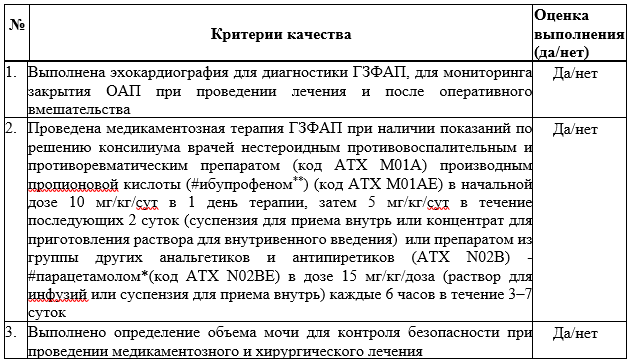
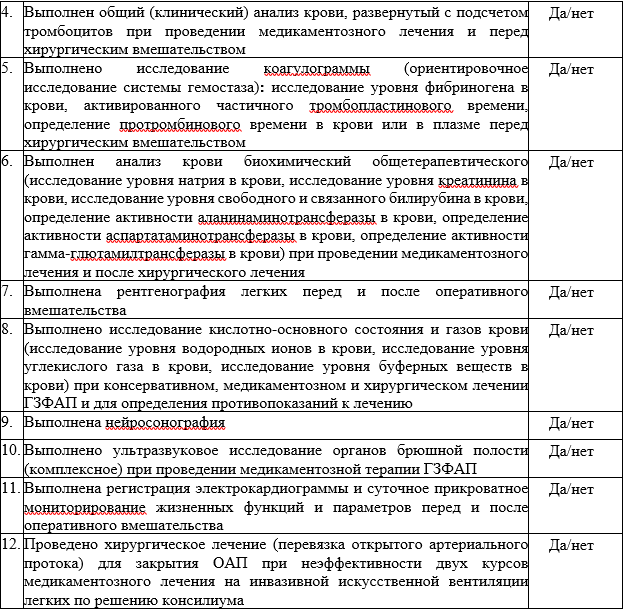
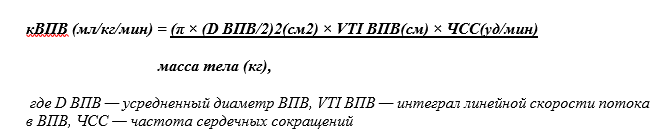
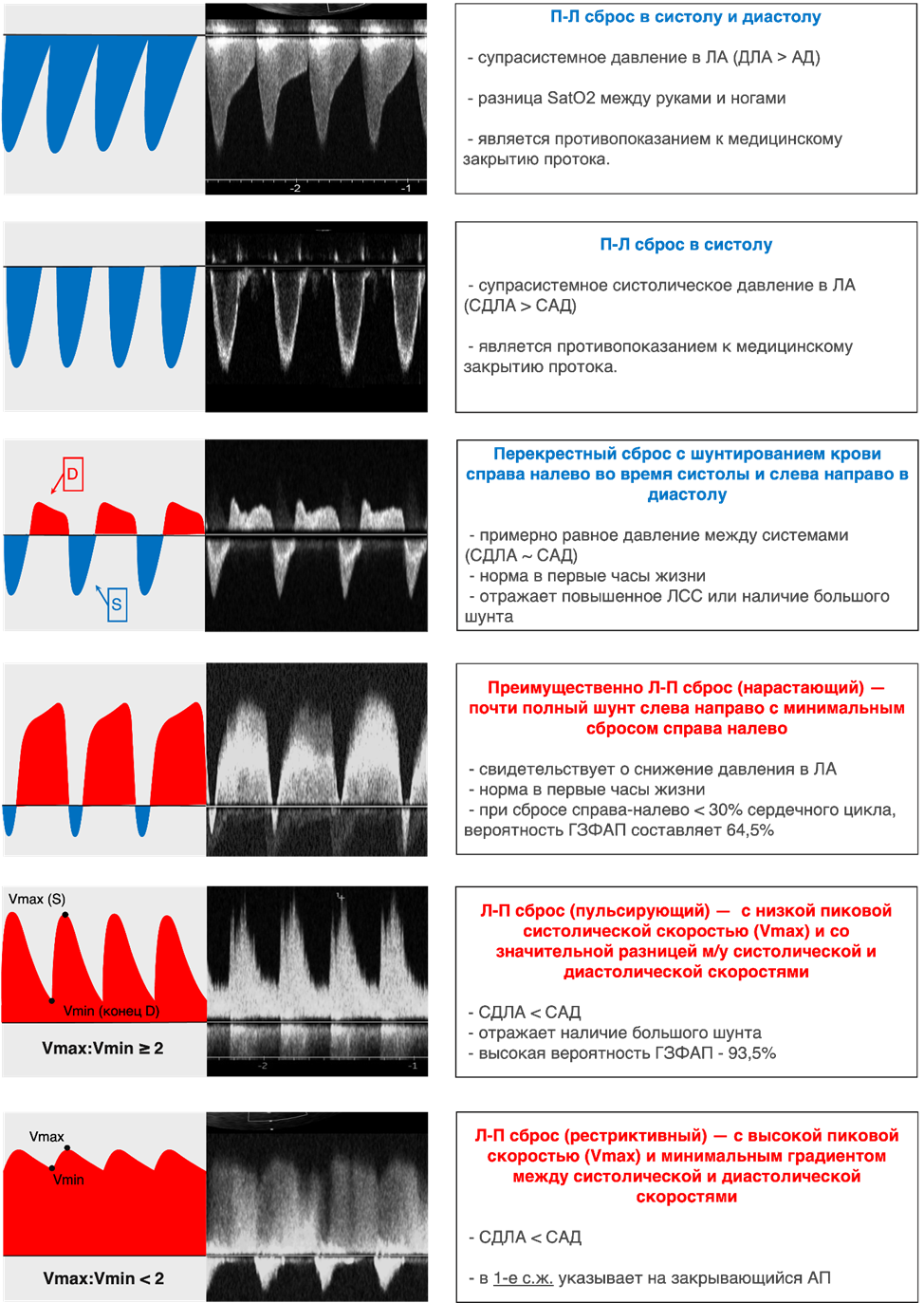
Gournay V. The ductus arteriosus: Physiology, regulation, and functional and congenital anomalies // Arch Cardiovasc Dis. 2011. Vol. 104, № 11. P. 578–585.
Zonnenberg I., De Waal K. The definition of a haemodynamic significant duct in randomized controlled trials: a systematic literature review // Acta Paediatr. 2012. Vol. 101, № 3. P. 247–251.
Khanafer-Larocque I, Soraisham A, Stritzke A, Al Awad E, Thomas S, Murthy P, Kamaluddeen M, Scott JN M.K. Intraventricular Hemorrhage: Risk Factors and Association With Patent Ductus Arteriosus Treatment in Extremely Preterm Neonates // Front. Pediatr. 2019. Vol. 7. P. 408.
Semberova J. et al. Spontaneous Closure of Patent Ductus Arteriosus in Infants ≤1500 g // Article PEDIATRICS. 2017. Vol. 140, № 2. P. 20164258.
Benitz W.E. Committee on Fetus and Newborn, American Academy of Pediatrics. Patent Ductus Arteriosus in Preterm Infants // FROM THE AMERICAN ACADEMY OF PEDIATRICS PEDIATRICS. 2016. Vol. 137, № 1.
Gentile R. et al. Pulsed Doppler echocardiographic determination of time of ductal closure in normal newborn infants // J Pediatr. 1981. Vol. 98, № 3. P. 443–448.
Koch J. et al. Prevalence of spontaneous closure of the ductus arteriosus in neonates at a birth weight of 1000 grams or less // Pediatrics. 2006. Vol. 117, № 4. P. 1113–1121.
Sehgal A., McNamara P.J. International perspective on management of a patent ductus arteriosus: Lessons learned // Semin Fetal Neonatal Med. Elsevier, 2018. Vol. 23, № 4. P. 278–284.
Lee J.A. et al. Perinatal risk factors of symptomatic preterm patent ductus arteriosus and secondary ligation // Pediatr Neonatol. Elsevier Taiwan LLC, 2020. Vol. 61, № 4. P. 439–446.
Park H.W. et al. Chorioamnionitis and Patent Ductus Arteriosus: A Systematic Review and Meta-Analysis // PLoS One. 2015. Vol. 10, № 9. P. 0138114.
Rakza T. et al. Early Hemodynamic Consequences of Patent Ductus Arteriosus in Preterm Infants with Intrauterine Growth Restriction // Journal of Pediatrics. 2007. Vol. 151, № 6. P. 624–628.
Gonzalez A. et al. Influence of infection on patent ductus arteriosus and chronic lung disease in premature infants weighing 1000 grams or less // Journal of Pediatrics. 1996. Vol. 128, № 4. P. 470–478.
Pourarian S. et al. Prevalence and risk factors associated with the patency of ductus arteriosus in premature neonates: a prospective observational study from Iran // Journal of Maternal-Fetal and Neonatal Medicine. 2017. Vol. 30, № 12. P. 1460–1464.
Simon S.R. et al. E-Mail Systematic Review and Meta-Analysis Platelet Counts and Patent Ductus Arteriosus in Preterm Infants: A Systematic Review and Meta-Analysis // Neonatology. 2015. Vol. 108, № 2. P. 143–151.
In Sung S. et al. Natural evolution of ductus arteriosus with noninterventional conservative management in extremely preterm infants born at 23-28 weeks of gestation // PLoS One. 2019. Vol. 14, № 2. P. 0212256.
Lee J.A. et al. Current Status of Therapeutic Strategies for Patent Ductus Arteriosus in Very-Low-Birth-Weight Infants in Korea // J Korean Med Sci. 2015. Vol. 30, № suppl1. P. 59–66.
Chiruvolu A., Punjwani P., Ramaciotti C. Clinical and echocardiographic diagnosis of patent ductus arteriosus in premature neonates // Early Hum Dev. Elsevier Ltd, 2009. Vol. 85, № 3. P. 147–149.
Noori S. et al. Failure of ductus arteriosus closure is associated with increased mortality in preterm infants // Pediatrics. 2009. Vol. 123, № 1. P. 138–144.
Clyman R.I., Couto J., Murphy G.M. Patent Ductus Arteriosus: Are Current Neonatal Treatment Options Better or Worse Than No Treatment at All? // Semin Perinatol. Elsevier Inc., 2012. Vol. 36, № 2. P. 123–129.
Nemerofsky S.L. et al. The ductus arteriosus rarely requires treatment in infants > 1000 grams // Am J Perinatol. 2008. Vol. 25, № 10. P. 661–666.
Costa S. et al. Efficacy of a single dose of antenatal corticosteroids on morbidity and mortality of preterm infants // European Journal of Obstetrics and Gynecology and Reproductive Biology. 2007. Vol. 131, № 2. P. 154–157.
Mcnamara P.J., Sehgal A.T. rational management of the patent ductus arteriosus: the need for disease staging. Disease Staging // Arch Dis Child Fetal Neonatal. 2007. Vol. 92. P. 424–427.
Van Laere D. et al. Application of Neonatologist Performed Echocardiography in the assessment of a patent ductus arteriosus // Pediatr Res. 2018. Vol. 84, № suppl 1. P. 46–56.
Singh Y., Katheria A., Tissot C. Functional Echocardiography in the Neonatal Intensive Care Unit // Indian Pediatr. 2018. Vol. 55, № 5. P. 417–424.
Urquhart DS N.RM. How good is clinical examination at detecting a significant patent ductus arteriosus in the preterm neonate? // Arch Dis Child. 2003. Vol. 88, № 1. P. 85–86.
Erdeve Ö. et al. SIMPLE: A Novel Scoring System for Predicting Hemodynamically Significant Patent Ductus Arteriosus Without Echocardiographic Evaluation in Extremely Low Birth Weight Infants // Frontiers in Pediatrics | www.frontiersin.org. 2021. Vol. 1. P. 649515.
Polglase G.R. et al. Circulatory insufficiency and Hypotension Related to the Ductus Arteriosus in Neonates // Front Pediatr. 2018. Vol. 6. P. 62.
Havranek T. et al. Feeding preterm neonates with patent ductus arteriosus (PDA): Intestinal blood flow characteristics and clinical outcomes // Journal of Maternal-Fetal and Neonatal Medicine. Informa Healthcare, 2015. Vol. 28, № 5. P. 526–530.
Lemmers P.M.A. et al. Patent Ductus Arteriosus and Brain Volume // Pediatrics. 2016. Vol. 137, № 4. P. 20153090.
Gillam-Krakauer M., Reese J. Diagnosis and management of patent ductus arteriosus // Neoreviews. 2018. Vol. 19, № 7. P. e394–e402.
Гнусаев С.Ф., Федерякина О.Б. ОТКРЫТЫЙ АРТЕРИАЛЬНЫЙ ПРОТОК У НЕДОНОШЕННЫХ НОВОРОЖДЕННЫХ: СОВРЕМЕННОЕ ПРЕДСТАВЛЕНИЕ О ДАВНЕЙ ПРОБЛЕМЕ // Астраханский медицинский жур нал. 2019. № 4822. P. 6–17.
Bagnoli F. et al. Treatment of patent ductus arteriosus (PDA) using ibuprofen: Renal side-effects in VLBW and ELBW newborns // Journal of Maternal-Fetal and Neonatal Medicine. 2013. Vol. 26, № 4. P. 423–429.
Pacifici G.M. Differential renal adverse effects of ibuprofen and indomethacin in preterm infants: a review // Clin Pharmacol. 2014. Vol. 31, № 6. P. 111–116.
Ndour D. et al. Adverse events related to ibuprofen treatment for patent ductus arteriosus in premature neonates // Archives de Pediatrie. French Society of Pediatrics, 2020. Vol. 27, № 8. P. 452–455.
García-Robles A, Gimeno Navarro A, Serrano Martín MDM, Párraga Quiles MJ, Parra Llorca A, Poveda-Andrés JL, Vento Torres M A.C.M. Paracetamol vs. Ibuprofen in Preterm Infants With Hemodynamically Significant Patent Ductus Arteriosus: A Non-inferiority Randomized Clinical Trial Protocol // Front Pediatr. 2020. Vol. 1, № 8. P. 372.
Clyman R.I. et al. PDA-TOLERATE Trial: An Exploratory Randomized Controlled Trial of Treatment of Moderate-to-Large Patent Ductus Arteriosus at 1 Week of Age // Journal of Pediatrics. 2019. Vol. 205. P. 41-48.e6.
Kushnir A., Pinheiro J.M.B. Comparison of renal effects of ibuprofen versus indomethacin during treatment of patent ductus arteriosus in contiguous historical cohorts // BMC Clin Pharmacol. 2011. Vol. 11.
Seo E.S. et al. Changes in serum creatinine levels and natural evolution of acute kidney injury with conservative management of hemodynamically significant patent ductus arteriosus in extremely preterm infants at 23–26 weeks of gestation // J Clin Med. 2020. Vol. 9, № 3. P. 17–21.
Park J.S. et al. Risk factors and effects of severe late-onset hyponatremia on long-term growth of prematurely born infants // Pediatr Gastroenterol Hepatol Nutr. 2020. Vol. 23, № 5. P. 472–483.
Conrad C., Newberry D. Understanding the Pathophysiology, Implications, and Treatment Options of Patent Ductus Arteriosus in the Neonatal Population // Advances in Neonatal Care. Lippincott Williams and Wilkins, 2019. Vol. 19, № 3. P. 179–187.
Walls L., Baker C.F., Sarkar S. Acetaminophen-induced hepatic failure with encephalopathy in a newborn // Journal of Perinatology. 2007. Vol. 27, № 2. P. 133–135.
Gillam-Krakauer M., Reese J. Diagnosis and management of patent ductus arteriosus // Neoreviews. American Academy of Pediatrics, 2018. Vol. 19, № 7. P. e394–e402.
Bardanzellu F. et al. Review Article Paracetamol in Patent Ductus Arteriosus Treatment: Efficacious and Safe? // Biomed Res Int. 2017. P. 1438038.
Singh Y. et al. International evidence-based guidelines on Point of Care Ultrasound (POCUS) for critically ill neonates and children issued by the POCUS Working Group of the European Society of Paediatric and Neonatal Intensive Care (ESPNIC) // Crit Care. 2020. Vol. 24, № 1. P. 65.
Mitra S. et al. Interventions for patent ductus arteriosus (PDA) in preterm infants: an overview of Cochrane Systematic Reviews // Cochrane Database of Systematic Reviews. John Wiley and Sons Ltd, 2023. Vol. 2023, № 4.
Polin R.A. Neonatology Questions and Controversies: neonatal hemodynamics, fourth edition. Elsevier, 2024.
Khositseth A M.N.N.P. Perfusion index as a diagnostic tool for patent ductus arteriosus in preterm infants // Neonatology. . 2013. Vol. 104, № 4. P. 250–254.
Ecury-Goossen G.M. et al. Resistive indices of cerebral arteries in very preterm infants: values throughout stay in the neonatal intensive care unit and impact of patent ductus arteriosus // Pediatr Radiol. Springer Verlag, 2016. Vol. 46, № 9. P. 1291–1300.
Broadhouse K.M. et al. Assessment of PDA shunt and systemic blood flow in newborns using cardiac MRI // NMR Biomed. 2013. Vol. 26, № 9. P. 1135–1141.
Zhongguo Dang Dai Er Ke Za Zhi. Value of bedside echocardiography in predicting persistent patency of the ductus arteriosus during the early postnatal period in very low birth weight infants. 2022. Vol. 24, № 1. P. 26–32.
Saha AK S.S.M.B.C.S. Clinical and echocardiographic characteristics associated with evolution of patent ductus arteriosus in preterm neonates: A prospective cohort study. // J Neonatal Perinatal Med. 2022. Vol. 15, № 3. P. 537–544.
Farouk H. M. T.A.A., S.H.A. The Role of Trans Cranial Doppler Ultrasonography as an Alternative Predictor for Hemodynamic Significance of Persistent Ductus Arteriosus in Preterm Neonates // Benha Journal of Applied Sciences. 2022. Vol. 7, № 2. P. 133–141.
Ichihashi K. et al. Cerebral and Abdominal Arterial Hemodynamics in Preterm Infants with Patent Ductus Arteriosus // Acta Paediatr Jpn. 1990. Vol. 32. 349–356 p.
Terrin G. et al. Echocardiography-Guided Management of Preterms With Patent Ductus Arteriosus Influences the Outcome: A Cohort Study // Front Pediatr. Frontiers Media S.A., 2020. Vol. 8.
Bravo M.C. et al. Randomised controlled clinical trial of standard versus echocardiographically guided ibuprofen treatment for patent ductus arteriosus in preterm infants: A pilot study // Journal of Maternal-Fetal and Neonatal Medicine. Informa Healthcare, 2014. Vol. 27, № 9. P. 904–909.
Ting J.Y. et al. Predictors of respiratory instability in neonates undergoing patient ductus arteriosus ligation after the introduction of targeted milrinone treatment // Journal of Thoracic and Cardiovascular Surgery. Elsevier Inc., 2016. Vol. 152, № 2. P. 498–504.
El-Khuffash A., McNamara P.J. Hemodynamic Assessment and Monitoring of Premature Infants // Clin Perinatol. 2017. Vol. 44, № 2. P. 377–393.
EL-Khuffash A. et al. A Pilot Randomized Controlled Trial of Early Targeted Patent Ductus Arteriosus Treatment Using a Risk Based Severity Score (The PDA RCT) // Journal of Pediatrics. 2021. Vol. 229. P. 127–133.
Smith A., El-Khuffash A. Patent ductus arteriosus clinical trials: Lessons learned and future directions // Children. 2021. Vol. 8, № 1. P. 47.
Elsayed Y.N., Fraser D. Patent ductus arteriosus in preterm infants, part 1: Understanding the pathophysiologic link between the patent ductus arteriosus and clinical complications // Neonatal Network. Springer Publishing Company, 2017. Vol. 36, № 5. P. 265–272.
Н.В. Харламова, Е.М. Спивак, Ю.А. Фисюк, А.М. Климачев И.Г.П. ОТКРЫТЫЙ АРТЕРИАЛЬНЫЙ ПРОТОК У ГЛУБОКОНЕДОНОШЕННЫХ ДЕТЕЙ. Ярославль: Филигрань, 2021., 2021.
Jaleel M.A., Rosenfeld C.R. Patent ductus arteriosus and intraventricular hemorrhage: A complex association // Journal of Pediatrics. 2013. Vol. 163, № 1. P. 8–10.
Camfferman F.A. et al. SYSTEMATIC REVIEW Diagnostic and predictive value of Doppler ultrasound for evaluation of the brain circulation in preterm infants: a systematic review // Pediatr Res.
Jim W.T. et al. Cerebral hemodynamic change and intraventricular hemorrhage in very low birth weight infants with patent ductus arteriosus // Ultrasound Med Biol. 2005. Vol. 31, № 2. P. 197–202.
Diez S. et al. Clinical Characteristics of Necrotizing Enterocolitis in Preterm Patients With and Without Persistent Ductus Arteriosus and in Patients With Congenital Heart Disease // Front Pediatr. Frontiers Media S.A., 2020. Vol. 8.
Cavalcanti L.S. et al. Serial Doppler velocimetry of mesenteric and portal flow in very-low-birth-weight preterm neonates with and without patent ductus arteriosus // Pediatr Radiol. Springer, 2020. Vol. 50, № 8. P. 1107–1114.
Ndour D. et al. Adverse events related to ibuprofen treatment for patent ductus arteriosus in premature neonates // Archives de Pediatrie. French Society of Pediatrics, 2020. Vol. 27, № 8. P. 452–455.
Serafini G. et al. Preoperative evaluation in infants and children: Recommendations of the Italian Society of Pediatric and Neonatal Anesthesia and Intensive Care (SARNePI) // Minerva Anestesiol. 2014. Vol. 80, № 4. P. 461–469.
Ассоциация сердечно-сосудистых хирургов России. Открытый артериальный проток ( ОАП ) // Клинические рекомендации. 2018.
Bouissou A. et al. Hypotension in Preterm Infants with Significant Patent Ductus Arteriosus: Effects of Dopamine // Journal of Pediatrics. 2008. Vol. 153, № 6. P. 790–794.
Nagata H. et al. Left ventricular efficiency after ligation of patent ductus arteriosus for premature infants // Journal of Thoracic and Cardiovascular Surgery. Elsevier Inc., 2013. Vol. 146, № 6. P. 1353–1358.
Ohlsson A S.S. Cochrane Database of Systematic Reviews Ibuprofen for the treatment of patent ductus arteriosus in preterm or low birth weight (or both) infants (Review) // Cochrane Database. 2018. Vol. 9, № 9. P. 003481.
Hamrick S.E.G., Hansmann G. Patent ductus arteriosus of the preterm infant // Pediatrics. 2010. Vol. 125, № 5. P. 1020–1030.
Marconi E. et al. Efficacy and safety of pharmacological treatments for patent ductus arteriosus closure: A systematic review and network meta-analysis of clinical trials and observational studies // Pharmacol Res. Elsevier, 2019. Vol. 148, № August. P. 104418.
Kluckow M., Evans N. Ductal shunting, high pulmonary blood flow, and pulmonary hemorrhage // Journal of Pediatrics. 2000. Vol. 137, № 1. P. 68–72.
Schena F. et al. Association between hemodynamically significant patent ductus arteriosus and bronchopulmonary dysplasia // Journal of Pediatrics. Elsevier Inc, 2015. Vol. 166, № 6. P. 1488–1492.
Kaempf J.W. et al. What happens when the patent ductus arteriosus is treated less aggressively in very low birth weight infants // Journal of Perinatology. 2012. Vol. 32, № 5. P. 344–348.
Terrin G. et al. Morbidity associated with patent ductus arteriosus in preterm newborns: a retrospective case-control study // Ital J Pediatr. Italian Journal of Pediatrics, 2021. Vol. 47, № 1. P. 4–11.
Jansen E.J.S. et al. Factors Associated With Benefit of Treatment of Patent Ductus Arteriosus in Preterm Infants: A Systematic Review and Meta-Analysis // Front Pediatr. 2021. Vol. 9, № February. P. 1–12.
Hirt D. et al. An optimized ibuprofen dosing scheme for preterm neonates with patent ductus arteriosus, based on a population pharmacokinetic and pharmacodynamic study // Br J Clin Pharmacol. 2008. Vol. 65, № 5. P. 629–636.
Ohlsson A S.S. Cochrane Database of Systematic Reviews Ibuprofen for the treatment of patent ductus arteriosus in preterm or low birth weight (or both) infants (Review) // Cochrane Database of Systematic Reviews. 2020. Vol. 2. P. 003481.
Shah S., Ohlsson A. Ibuprofen for the prevention of patent ductus arteriosus in preterm and/or low birth weight infants // Cochrane Database of Systematic Reviews. 2018. Vol. 9, № 9. P. CD003481.
Desfrere L. et al. Dose-finding study of ibuprofen in patent ductus arteriosus using the continual reassessment method // J Clin Pharm Ther. 2005. Vol. 30. P. 121–132.
Mitra S. et al. Association of Placebo, Indomethacin, Ibuprofen, and Acetaminophen With Closure of Hemodynamically Significant Patent Ductus Arteriosus in Preterm Infants A Systematic Review and Meta-analysis // JAMA. 2018. Vol. 27, № 3. P. 1221–1238.
Slaughter J.L. et al. Early prediction of spontaneous Patent Ductus Arteriosus (PDA) closure and PDA-associated outcomes: a prospective cohort investigation // BMC Pediatr. 2019. Vol. 19, № 1. P. 333.
Gokmen T. et al. Efficacy and safety of oral versus intravenous ibuprofen in very low birth weight preterm infants with patent ductus arteriosus // Journal of Pediatrics. Mosby Inc., 2011. Vol. 158, № 4. P. 549-554.e1.
Dang D. et al. Comparison of Oral Paracetamol versus Ibuprofen in Premature Infants with Patent Ductus Arteriosus: A Randomized Controlled Trial // PLoS One. 2013. Vol. 8, № 11. P. 77888.
Jasani B., Mitra S., Shah P.S. Paracetamol (acetaminophen) for patent ductus arteriosus in preterm or low birth weight infants // Cochrane Database of Systematic Reviews. John Wiley and Sons Ltd, 2022. Vol. 2022, № 12.
Luo H. et al. The impact of the route of administration on the efficacy and safety of the drug therapy for patent ductus arteriosus in premature infants: a systematic review and meta-analysis // PeerJ. PeerJ Inc., 2024. Vol. 12.
Ferguson J.M. Pharmacotherapy for patent ductus arteriosus closure // Congenit Heart Dis. Blackwell Publishing Ltd, 2019. Vol. 14, № 1. P. 52–56.
Manalastas M. et al. Acetaminophen therapy for persistent patent ductus arteriosus // Neoreviews. 2021. Vol. 22, № 5. P. e320–e331.
Ohlsson A S.P. Cochrane Database of Systematic Reviews Paracetamol (acetaminophen) for patent ductus arteriosus in preterm or low birth weight infants (Review) // Cochrane Database. 2018. Vol. 4, № 4. P. 010061.
Dang D. et al. Comparison of Oral Paracetamol versus Ibuprofen in Premature Infants with Patent Ductus Arteriosus: A Randomized Controlled Trial // PLoS One. 2013. Vol. 8, № 11. P. 77888.
El-Khuffash A. et al. Efficacy of paracetamol on patent ductus arteriosus closure may be dose dependent: evidence from human and murine studies // Pediatr Res. 2014. Vol. 76, № 3. P. 238–214.
Mashally S. et al. Is late treatment with acetaminophen safe and effective in avoiding surgical ligation among extremely preterm neonates with persistent patent ductus arteriosus? // Journal of Perinatology. Springer US, 2021. Vol. 41, № 10. P. 2519–2525.
Noureldein M. et al. Paracetamol for patent ductus arteriosus in preterm infants: a UK national survey // Journal of Maternal-Fetal and Neonatal Medicine. 2020. Vol. 7058.
Bardanzellu F. et al. Paracetamol in Patent Ductus Arteriosus Treatment: Efficacious and Safe? // Biomed Res Int. 2017. Vol. 2017.
van den Anker J.N., Allegaert K. Acetaminophen in the Neonatal Intensive Care Unit: Shotgun Approach or Silver Bullet // Journal of Pediatrics. Elsevier Inc., 2018. Vol. 198. P. 10–11.
Terrin G. et al. Paracetamol for the treatment of patent ductus arteriosus in preterm neonates: A systematic review and meta-analysis // Arch Dis Child Fetal Neonatal Ed. BMJ Publishing Group, 2016. Vol. 101, № 2. P. F127–F136.
Oncel M.Y. et al. Oral paracetamol versus oral ibuprofen in the management of patent ductus arteriosus in preterm infants: A randomized controlled trial // Journal of Pediatrics. 2014. Vol. 164, № 3. P. 510–514.
Graham G.G. et al. The modern pharmacology of paracetamol: therapeutic actions, mechanism of action, metabolism, toxicity and recent pharmacological findings // Inflammopharmacology. 2013. Vol. 21, № 3. P. 201–232.
Dani C. et al. Intravenous paracetamol in comparison with ibuprofen for the treatment of patent ductus arteriosus in preterm infants: a randomized controlled trial // Eur J Pediatr. European Journal of Pediatrics, 2021. Vol. 180, № 3. P. 807–816.
Jasani B., Weisz D.E., McNamara P.J. Evidence-based use of acetaminophen for hemodynamically significant ductus arteriosus in preterm infants // Semin Perinatol. Elsevier, 2018. Vol. 42, № 4. P. 243–252.
Dani C. et al. Patent ductus arteriosus in preterm infants born at 23–24 weeks’ gestation: Should we pay more attention? // Early Hum Dev. 2019. Vol. 135, № April. P. 16–22.
Published by the Bedside Clinical Guidelines Partnership and West Midlands Neonatal Operational Delivery Network. Neonatal guidelines 2022-2024. 22AD.
Benitz W.E. Treatment of persistent patent ductus arteriosus in preterm infants: Time to accept the null hypothesis // Journal of Perinatology. Nature Publishing Group, 2010. Vol. 30, № 4. P. 241–252.
Benitz W.E. Patent Ductus Arteriosus in Preterm Infants // Pediatrics. 2016. Vol. 137, № 1. P. 1–6.
Carmo K.B., Evans N., Paradisis M. Duration of indomethacin treatment of the preterm patent ductus arteriosus as directed by echocardiography // Journal of Pediatrics. Mosby Inc., 2009. Vol. 155, № 6. P. 812–822.
Evans N. Preterm patent ductus arteriosus: A continuing conundrum for the neonatologist? // Semin Fetal Neonatal Med. Elsevier Ltd, 2015. Vol. 20, № 4. P. 272–277.
Hamrick S.E.G. et al. Patent ductus arteriosus of the preterm infant // Pediatrics. 2020. Vol. 146, № 5.
Abushaban L. et al. Normal reference ranges for left ventricular dimensions in preterm infants // Ann Pediatr Cardiol. 2014. Vol. 7, № 3. P. 180–186.
Abu-Shaweesh J.M., Almidani E. PDA: Does it matter? // Int J Pediatr Adolesc Med. Elsevier Ltd, 2020. Vol. 7, № 1. P. 9–12.
Su B.H. et al. Therapeutic strategy of patent ductus arteriosus in extremely preterm infants // Pediatr Neonatol. Elsevier Taiwan LLC, 2020. Vol. 61, № 2. P. 133–141.
Su B.H. et al. Circulatory Management Focusing on Preventing Intraventricular Hemorrhage and Pulmonary Hemorrhage in Preterm Infants // Pediatrics and Neonatology. Elsevier (Singapore) Pte Ltd, 2016. Vol. 57, № 6. P. 453–462.
Ibrahim T. et al. Selective Treatment of PDA in High-Risk VLBW Infants With Birth Weight ≤800 g or <27 Weeks and Short-Term Outcome: A Cohort Study // Front Pediatr. 2021. Vol. 8, № January. P. 1–10.
Mitra S. et al. Early treatment versus expectant management of hemodynamically significant patent ductus arteriosus for preterm infants // Cochrane Database of Systematic Reviews. John Wiley and Sons Ltd, 2020. Vol. 2020, № 12.
Isayama T. et al. Patent Ductus Arteriosus Management and Outcomes in Japan and Canada: Comparison of Proactive and Selective Approaches // Am J Perinatol. 2015. Vol. 32, № 11. P. 1087–1094.
Sankar M.N., Bhombal S., Benitz W.E. PDA: To treat or not to treat // Congenit Heart Dis. Blackwell Publishing Ltd, 2019. Vol. 14, № 1. P. 46–51.
Rozé J.C. et al. Association between early screening for patent ductus arteriosus and in-hospital mortality among extremely preterm infants // JAMA - Journal of the American Medical Association. 2015. Vol. 313, № 24. P. 2441–2448.
Sellmer A. et al. Morbidity and mortality in preterm neonates with patent ductus arteriosus on day 3 // Arch Dis Child Fetal Neonatal Ed. 2013. Vol. 98, № 6. P. 505–510.
Bell J.L. et al. Correction to: Baby-OSCAR: Outcome after Selective early treatment for Closure of patent ductus ARteriosus in preterm babies—a statistical analysis plan for short-term outcomes (Trials, (2021), 22, 1, (368), 10.1186/s13063-021-05324-3) // Trials. Trials, 2021. Vol. 22, № 1. P. 13063.
Cambonie G., Clyman R.I., Rozé J.C. Management of persistent ductus arteriosus in very premature neonates. Results of the French TRIOCAPI trial, perspectives for clinicians, and subsequent studies on this topic // Archives de Pediatrie. 2021. Vol. 28, № 7. P. 501–503.
Hundscheid T. et al. Multi-centre, randomised non-inferiority trial of early treatment versus expectant management of patent ductus arteriosus in preterm infants (the BeNeDuctus trial): statistical analysis plan // Trials. Trials, 2021. Vol. 22, № 1. P. 1–12.
Berry M.J. et al. Outcomes of 23- and 24-weeks gestation infants in Wellington, New Zealand: A single centre experience // Sci Rep. 2017. Vol. 7, № 1. P. 3–10.
Emre Canpolat F. et al. Conservative Non-intervention Approach for Hemodynamically Significant Patent Ductus Arteriosus in Extremely Preterm Infants // Front Pediatr. 2020. Vol. 23, № 8. P. 605134.
Dani C. et al. High-dose ibuprofen for patent ductus arteriosus in extremely preterm infants: A randomized controlled study // Clin Pharmacol Ther. Nature Publishing Group, 2012. Vol. 91, № 4. P. 590–596.
Meißner U. et al. Improved closure of patent ductus arteriosus with high doses of ibuprofen // Pediatr Cardiol. 2012. Vol. 33, № 4. P. 586–590.
Sallmon H., Koehne P., Hansmann G. Recent Advances in the Treatment of Preterm Newborn Infants with Patent Ductus Arteriosus // Clin Perinatol. 2016. Vol. 43, № 1. P. 113–129.
Shin J. et al. Conservative Treatment Without Any Intervention Compared With Other Therapeutic Strategies for Symptomatic Patent Ductus Arteriosus in Extremely Preterm Infants: A Nationwide Cohort Study in Korea // Front Pediatr. 2021. Vol. 9, № October. P. 1–8.
Willis K.A., Weems M.F. Hemodynamically significant patent ductus arteriosus and the development of bronchopulmonary dysplasia // Congenit Heart Dis. 2019. Vol. 14, № 1. P. 27–32.
de Boode W.P. et al. Role of neonatologist-performed echocardiography in the assessment and management of patent ductus arteriosus physiology in the newborn // Seminars in Fetal and Neonatal Medicine. W.B. Saunders Ltd, 2018. Vol. 23, № 4. P. 292–297.
Bravo M.C. et al. Randomised controlled clinical trial of standard versus echocardiographically guided ibuprofen treatment for patent ductus arteriosus in preterm infants: A pilot study // Journal of Maternal-Fetal and Neonatal Medicine. Informa Healthcare, 2014. Vol. 27, № 9. P. 904–909.
Richards J. et al. A second course of ibuprofen is effective in the closure of a clinically significant PDA in ELBW infants // Pediatrics. 2009. Vol. 124, № 2. P. 287–293.
Nadir E. et al. Paracetamol treatment of patent ductus arteriosus in preterm infants // Journal of Perinatology. 2014. Vol. 34, № 10. P. 748–749.
Allegaert K. et al. Paracetamol to induce ductus arteriosus closure: Is it valid? // Archives of Disease in Childhood. 2013. Vol. 98, № 6. P. 462–466.
Constance J.E. et al. Risk of nonsteroidal anti-inflammatory drug-associated renal dysfunction among neonates diagnosed with patent ductus arteriosus and treated with gentamicin // Journal of Perinatology. Nature Publishing Group, 2017. Vol. 37, № 10. P. 1093–1102.
Weisz D.E., Giesinger R.E. Surgical management of a patent ductus arteriosus: Is this still an option? // Seminars in Fetal and Neonatal Medicine. W.B. Saunders Ltd, 2018. Vol. 23, № 4. P. 255–266.
Malviya M., Ohlsson A., Shah S. Surgical versus medical treatment with cyclooxygenase inhibitors for symptomatic patent ductus arteriosus in preterm infants // Cochrane Database of Systematic Reviews. John Wiley and Sons Ltd, 2008. № 1. P. 003951.
Weisz D.E. et al. PDA liǵation and health outcomes: A meta-analysis // Pediatrics. American Academy of Pediatrics, 2014. Vol. 133, № 4.
Ngo S., Profit J., Gould J.B. Trends in Patent Ductus Arteriosus Diagnosis and Management for Very Low Birth Weight Infants // Pediatrics. 2017. Vol. 139, № 4. P. 20162390.
Park J. et al. Patent ductus arteriosus treatment trends and associated morbidities in neonates // Scientific Reports |. 2021. Vol. 11, № 1. P. 10689.
Н.В. Харламова, Е.М. Спивак, Ю.А. Фисюк, А.М. Климачев И.Г.П. ОТКРЫТЫЙ АРТЕРИАЛЬНЫЙ ПРОТОК У ГЛУБОКОНЕДОНОШЕННЫХ ДЕТЕЙ. Ярославль: Филигрань, 2021., 2021.
Mirea L. et al. Treatment of patent ductus arteriosus and neonatal mortality/morbidities: Adjustment for treatment selection bias // Journal of Pediatrics. Mosby Inc., 2012. Vol. 161, № 4.
Разумовский А.Ю., Алхасов А.Б., Митупов З.Б., Феоктистова Е.В., Ситникова М.И., Коллеров М.Ю. Н.Ю.В. ХИРУРГИЧЕСКАЯ КОРРЕКЦИЯ ОТКРЫТОГО АРТЕРИАЛЬНОГО ПРОТОКА У ДЕТЕЙ // Российский вестник десткой хирургии, анестезиологии и реаниматологии. 2017. P. 25–33.
Марасина А.В., Горелик Ю.В., Шихранов А.А., Цытко А.Л., Анцыгин Н.В., Мостовой А.В. М.Р.Р. Хирургическое лечение открытого артериального протока у недоношенных детей с низкой массой тела // Научно-практический журнал Детские болезни сердца и сосудов. 2012. Vol. 1.
Reese J. et al. Management of Patent Ductus Arteriosus in Premature Infants in 2020 // Frontiers in Pediatrics | www.frontiersin.org. 2021. Vol. 8. P. 590578.
Scerbo D. et al. Percutaneous Closure of the Patent Ductus Arteriosus in Very-Low-Weight Infants Practice Gaps // Neoreviews. 2020. Vol. 21, № 7. P. 469–478.
Agrawal H. et al. New Patent Ductus Arteriosus Closure Devices and Techniques // Interventional Cardiology Clinics. Elsevier Inc., 2019. Vol. 8, № 1. P. 23–32.
Janvier A. et al. Anesthetic technique and postoperative outcome in preterm infants undergoing PDA closure // Journal of Perinatology. 2010. Vol. 30, № 10. P. 677–682.
Joshi R. et al. Anesthesia protocols for “bedside” preterm patent ductus arteriosus ligation: A single-institutional experience // Ann Pediatr Cardiol. 2021. Vol. 14, № 3. P. 343–349.
Shelly Rainforth Collins. Elsirvers s 2024 INTRAVENOUS MEDICATIONS. 40th ed. Elsilver, 2024.
christine a.Gleason Taylor Sawyer. Averys diseases of the newborn. 2024.
Крючко Д.С., Дегтярев Д.Н., Зубков В.В. Открытый артериальный проток у недоношенных. Геотар-Медиа. 2019.
Durrmeyer X. et al. Use of Analgesic and Sedative Drugs in the NICU: Integrating Clinical Trials and Laboratory Data Experimental Data on the Effects of Analgesics and Sedative Drugs During Central Nervous System Development // Pediatr Res. 2010. Vol. 67. 117–127 p.
Anand K.J.S., Hall R.W. Pharmacological therapy for analgesia and sedation in the newborn // Archives of Disease in Childhood: Fetal and Neonatal Edition. 2006. Vol. 91, № 6.
Wyllie J. Treatment of patent ductus arteriosus // Seminars in Neonatology. W.B. Saunders Ltd, 2003. Vol. 8, № 6. P. 425–432.
Jain A. et al. Use of targeted neonatal echocardiography to prevent postoperative cardiorespiratory instability after patent ductus arteriosus ligation // Journal of Pediatrics. Mosby Inc., 2012. Vol. 160, № 4.
Halliday M. et al. Milrinone use for hemodynamic instability in patent ductus arteriosus ligation // Journal of Maternal-Fetal and Neonatal Medicine. Taylor and Francis Ltd, 2017. Vol. 30, № 5. P. 529–533.
Ulrich T.J.B. et al. Post-ligation cardiac syndrome is associated with increased morbidity in preterm infants // Journal of Perinatology. 2018. Vol. 38. P. 537–542.
McNamara P.J. et al. Patent ductus arteriosus ligation is associated with impaired left ventricular systolic performance in premature infants weighing less than 1000 g // Journal of Thoracic and Cardiovascular Surgery. 2010. Vol. 140, № 1. P. 150–157.
Gupta S.R.S. Shock and Hypotension in the Newborn Medication [Electronic resource] // Medscape. 2021.
Dilli D., Soylu H., Tekin N. Neonatal hemodynamics and management of hypotension in newborns // Turk Pediatri Ars. 2018. P. 65–75.
Schwarz C.E., Dempsey E.M. Management of Neonatal Hypotension and Shock // Semin Fetal Neonatal Med. Elsevier, 2020. Vol. 25, № 5. P. 101121.
Elsayed Y., Abdul Wahab M.G. A new physiologic-based integrated algorithm in the management of neonatal hemodynamic instability // Eur J Pediatr. Springer Berlin Heidelberg, 2022. Vol. 181, № 3. P. 1277–1291.
Schroeder L. et al. Evaluation of levosimendan as treatment option in a large case ‑ series of preterm infants with cardiac dysfunction and pulmonary hypertension // Eur J Pediatr. Springer Berlin Heidelberg, 2023. № 0123456789.
Serrano R.M. et al. Comparison of ‘post-patent ductus arteriosus ligation syndrome’ in premature infants after surgical ligation vs. percutaneous closure // Journal of Perinatology. Springer Nature, 2020. Vol. 40, № 2. P. 324–329.
Pacifici G.M. Clinical pharmacology of furosemide in neonates: A review // Pharmaceuticals. 2013. Vol. 6, № 9. P. 1094–1129.
S.Sinha L.Miall L.Jardine. Essential neonatal medicine sixth edition. 2018.
Mosalli R., Paes B. Patent Ductus Arteriosus: Optimal Fluid Requirements in Preterm Infants.
Kumbhat N., Noori S. Corticosteroids for Neonatal Hypotension // Clin Perinatol. Elsevier, 2020. Vol. 47, № 3. P. 549–562.
Elsayed Y., Abdul Wahab M.G. A new physiologic-based integrated algorithm in the managemElsayed, Y., & Abdul Wahab, M. G. (2022). A new physiologic-based integrated algorithm in the management of neonatal hemodynamic instability. European Journal of Pediatrics, 181(3), 1277–1291. htt // Eur J Pediatr. Springer Berlin Heidelberg, 2022. Vol. 181, № 3. P. 1277–1291.
Wu T.W., Noori S. Recognition and management of neonatal hemodynamic compromise // Pediatr Neonatol. Elsevier Taiwan LLC, 2021. Vol. 62. P. S22–S29.
Six N., Herbaut N., Salinesi C. Hemodynamic Management of the Micropreemie: When Inotropes are Not Enough // Blockchain: Research and Applications. Elsevier Ltd, 2022. P. 100061.
Sarkar S., Dechert R., Donn S.M. Is refractory hypotension in preterm infants a manifestation of early ductal shunting? // Journal of Perinatology. 2007. Vol. 27, № 6. P. 353–358.
Giesinger R.E., McNamara P.J. Hemodynamic instability in the critically ill neonate: An approach to cardiovascular support based on disease pathophysiology // Seminars in Perinatology. W.B. Saunders, 2016. Vol. 40, № 3. P. 174–188.
Bell E., Acarregui M. Restricted versus liberal water intake for preventing morbidity and mortality in preterm infants // Cochrane Database Syst Rev. John Wiley & Sons, Ltd, 2001. № 2. P. 000503.
Brion L.P., Campbell D. Furosemide for prevention of morbidity in indomethacin-treated infants with patent ductus arteriosus // Cochrane Database of Systematic Reviews. Wiley, 2001. № 3. P. 001148.
Cotton R., Suarez S., Reese J. Unexpected extra-renal effects of loop diuretics in the preterm neonate // Acta Paediatrica, International Journal of Paediatrics. 2012. Vol. 101, № 8. P. 835–845.
Noori S. et al. Effects of low oxygen saturation limits on the ductus arteriosus in extremely low birth weight infants // Journal of Perinatology. 2009. Vol. 29, № 8. P. 553–557.
Vanhaesebrouck S. et al. Conservative treatment for patent ductus arteriosus in the preterm // Arch Dis Child Fetal Neonatal Ed. 2007. Vol. 92, № 4. P. 244–247.
Letshwiti J.B. et al. A conservative treatment of patent ductus arteriosus in very low birth weight infants // Early Hum Dev. Elsevier Ireland Ltd, 2017. Vol. 104. P. 45–49.
Martini S. et al. To Feed or Not to Feed: A Critical Overview of Enteral Feeding Management and Gastrointestinal Complications in Preterm Neonates with a Patent Ductus Arteriosus // Nutrients. 2019. Vol. 12, № 1. P. 83.
Benitz W.E., Bhombal S. The use of non-steroidal anti-inflammatory drugs for patent ductus arteriosus closure in preterm infants // Seminars in Fetal and Neonatal Medicine. W.B. Saunders Ltd, 2017. Vol. 22, № 5. P. 302–307.
Ohlsson A S.S. Cochrane Database of Systematic Reviews Ibuprofen for the treatment of patent ductus arteriosus in preterm or low birth weight (or both) infants (Review) // Cochrane Database of Systematic Reviews. 2020. Vol. 2. P. 003481.
Liebowitz M., Clyman R.I. Prophylactic Indomethacin Compared with Delayed Conservative Management of the Patent Ductus Arteriosus in Extremely Preterm Infants: Effects on Neonatal Outcomes // Journal of Pediatrics. Mosby Inc., 2017. Vol. 187. P. 119-126.e1.
Van Overmeire B A.K.C.A.D.C.D.W.J.A.W.J.H.I.L.J. Prophylactic ibuprofen in premature infants: a multicentre, randomised, double-blind, placebo-controlled trial. // Lancet. 2004. Vol. 364, № 9449. P. 1945–1949.
Narayan S.A. et al. Long-term follow-up is not indicated after routine interventional closure of persistent arterial ducts // Catheterization and Cardiovascular Interventions. John Wiley and Sons Inc., 2015. Vol. 86, № 1. P. 100–104.
Walsh EP L.P.E.R.Z.S.H.H.M.O. Electrocardiogram of the premature infant at 1 year of age353-6. // Pediatrics. 1986. Vol. 77, № 3. P. 353–356.
Arvanitaki A G.G.B.H.L.AE. Eisenmenger syndrome: diagnosis, prognosis and clinical management. l 20. // Heart. 2020. Vol. 106, № 21. P. 1638.
Backes CH H.K.S.E.S.J.L.T.W.D.M.M.B.S.S.C.M.P.B.W.G. V. Patent Ductus Arteriosus: A Contemporary Perspective for the Pediatric and Adult Cardiac Care Provider. // J Am Heart Assoc. 2022. Vol. 11, № 17.
Ассоциация сердечно-сосудистых хирургов России. Открытый артериальный проток (ОАП). 2016.
Babla K., Shetty S., Kulkarni A. A clinical and echocardiographic approach to evaluation of patent ductus arteriosus in preterm infants // Paediatrics and Child Health (United Kingdom). Elsevier Ltd, 2020. Vol. 30, № 4. P. 129–134.
de Freitas Martins F. et al. Relationship of Patent Ductus Arteriosus Size to Echocardiographic Markers of Shunt Volume // Journal of Pediatrics. Elsevier Inc., 2018. Vol. 202. P. 50-55.e3.
El-Saiedi S. et al. Development of tissue Doppler-derived predictors of hemodynamically significant patent ductus arteriosus and the ability to incorporate it in targeted neonatal echocardiography protocol // J Saudi Heart Assoc. King Saud University, 2019. Vol. 31, № 2. P. 69–74.
Siassi, Bijan; Noori, Shahab; Wong, Pierre; Acherman Ruben. Practical Neonatal Echocardiography. McGraw-Hill Education. 2019. 2020. Vol. 8, № November. 1–11 p.
Siassi, Bijan; Noori, Shahab; Wong, Pierre; Acherman Ruben.M.-H.Education. Practical Neonatal Echocardiography. 1th ed. Mc Graw Hill Education, 2019.
Rios D.R. et al. Early Role of the Atrial-Level Communication in Premature Infants with Patent Ductus Arteriosus // Journal of the American Society of Echocardiography. American Society of Echocardiography, 2021. Vol. 34, № 4. P. 423-432.e1.
Naulaers G. et al. Echocardiographic Diagnosis and Hemodynamic Evaluation of Patent Ductus Arteriosus in Extremely Low Gestational Age Newborn (ELGAN) Infants // Frontiers in Pediatrics | www.frontiersin.org. 2020. Vol. 8. P. 573627.
Ficial B. et al. Survey of PDA management in very low birth weight infants across Italy // Ital J Pediatr. Italian Journal of Pediatrics, 2020. Vol. 46, № 1. P. 1–8.
Guthrie J.D. A novel echocardiographic marker (PDAM) incorporating the diameter of the patent foramen ovale to assess hemodynamically significant patent ductus arteriosus // Journal of Diagnostic Medical Sonography. 2015. Vol. 31, № 1. P. 30–37.
Jain A., Shah P.S. Diagnosis, evaluation, and management of patent ductus arteriosus in preterm neonates // JAMA Pediatr. 2015. Vol. 169, № 9. P. 863–872.
Guo X. et al. Identification of the hemodynamic significant patent ductus arteriosus in preterm infants // Hong Kong Journal of Pediatric Research. 2021. Vol. 4, № 1. P. 17–20.
Choi E.K., Park K.H., Choi B.M. Size of Patent Ductus Arteriosus and Echocardiographic Markers of Shunt Volume in Preterm Infants Based on Postnatal Age // Front Pediatr. 2021. Vol. 9, № April. P. 1–7.
Lopez L. et al. Recommendations for Quantification Methods During the Performance of a Pediatric Echocardiogram: A Report From the Pediatric Measurements Writing Group of the American Society of Echocardiography Pediatric and Congenital Heart Disease Council // Journal of the American Society of Echocardiography. Elsevier Inc, 2010. Vol. 23, № 5. P. 465–495.
de Boode W.P. et al. The role of Neonatologist Performed Echocardiography in the assessment and management of neonatal shock // Pediatr Res. 2018. Vol. 84, № 1. P. 57–67.
Ficial B. et al. Validation study of the accuracy of echocardiographic measurements of systemic blood flow volume in newborn infants // Journal of the American Society of Echocardiography. Elsevier Inc, 2013. Vol. 26, № 12. P. 1365–1371.
Bischoff A.R. et al. Assessment of superior vena cava flow and cardiac output in different patterns of patent ductus arteriosus shunt // Echocardiography. 2021. № July. P. 1–10.
Smith A., El-Khuffash A.F. Defining “haemodynamic significance” of the patent ductus arteriosus: do we have all the answers? // Neonatology. 2020. Vol. 117, № 2. P. 225–232.
Job S. et al. Echocardiography-Guided Management of Preterms With Patent Ductus Arteriosus Influences the Outcome: A Cohort Study // Front Pediatr. 2020. Vol. 21, № 8. P. 582735.
Polat T.B., Celik I.H., Erdeve O. Early predictive echocardiographic features of hemodynamically significant patent ductus arteriosus in preterm VLBW infants // Pediatrics International. 2016. Vol. 58, № 7. P. 589–594.
Jantzen D.W. et al. Is combined atrial volumetrics by two-dimensional echocardiography a suitable measure for quantitative assessment of the hemodynamic significance of patent ductus arteriosus in neonates and infants? // Echocardiography. 2010. Vol. 27, № 6. P. 696–701.
Erdeve Ö. et al. SIMPLE: A Novel Scoring System for Predicting Hemodynamically Significant Patent Ductus Arteriosus Without Echocardiographic Evaluation in Extremely Low Birth Weight Infants // Frontiers in Pediatrics | www.frontiersin.org. 2021. Vol. 1, № 9. P. 649515.
Horvath. Review of the ASA Physical Status Classification // Anesthesiology. 2021. Vol. 135. 904–923 p.
Karabulut B, Paytoncu S. Efficacy and Safety of Oral Paracetamol vs. Oral Ibuprofen in the Treatment of Symptomatic Patent Ductus Arteriosus in Premature Infants // Paediatr Drugs. 2019 Apr;21(2) Р. 113-121.
Mitra S, Hébert A, Castaldo M, Disher T, El-Naggar W, Dhillon S, Alhassen Z, Koo J, Katheria AC, Hyderi A, Kumaran K, Makoni M, Weisz DE, Jain A, Bacchini F, Cameron A, Hatfield T, Dorling J, McNamara PJ, Thabane L. Selective early medical treatment of the patent ductus arteriosus in extremely low gestational age infants: a pilot randomised controlled trial protocol (SMART-PDA). BMJ Open. 2024 Jul 24;14(7):e087998. doi: 10.1136/bmjopen-2024-087998. PMID: 39053961; PMCID: PMC11284877.
Homedi A, Mandurah A, Alamer F, Alkaabi M, Bazbouz E, Alharbi F, Alamoudi Alshreedah S, Alwatban A, Alsaif S, Ali K. Early protocol-based echocardiographic assessment and management of patent ductus arteriosus in infants less than 29 weeks' gestation. BMJ Paediatr Open. 2025 Dec 7;9(1):e004177. doi: 10.1136/bmjpo-2025-004177. PMID: 41360643; PMCID: PMC12699718.
R.E. Giesinger, A.A. Hobson, A.R. Bischoff, J.M. Klein, P.J. McNamara. Impact of early screening echocardiography and targeted PDA treatment on neonatal outcomes in “22-23” week and “24-26” infants, Seminars in Perinatology, Volume 47, Issue 2, 2023.151721, ISSN 0146-0005,https://doi.org/10.1016/j.semperi.2023.151721
De Waal K., Phad N., Stubbs M., Chen Y., Kluckow M. A Randomized Placebo-Controlled Pilot Trial of Early Targeted Nonsteroidal Anti-Inflammatory Drugs in Preterm Infants with a Patent Ductus Arteriosus. J. Pediatr. 2021;228:82–86.e2. doi: 10.1016/j.jpeds.2020.08.062.
Altit G., Saeed S., Beltempo M., Claveau M., Lapointe A., Basso O. Outcomes of extremely premature infants comparing patent ductus arteriosus management approaches. J. Pediatr. 2021;235:49–57.e2. doi: 10.1016/j.jpeds.2021.04.014
Clyman R.I., Hills N.K. Patent ductus arteriosus (PDA) and pulmonary morbidity: Can early targeted pharmacologic PDA treatment decrease the risk of bronchopulmonary dysplasia? Semin. Perinatol. 2023;47:151718. doi: 10.1016/j.semperi.2023.151718.
Clyman R.I., Liebowitz M., Kaempf J., Erdeve O., Bulbul A., Håkansson S., Lindqvist J., Farooqi A., Katheria A., Sauberan J., et al. PDA-TOLERATE trial: An exploratory randomized controlled trial of treatment of moderate-to-large patent ductus arteriosus at 1 week of age. J. Pediatr. 2019;205:41–48.e6. doi: 10.1016/j.jpeds.2018.09.012
Chan B, Singh Y. Personalized Evidence-Based Management of Patent Ductus Arteriosus in Preterm Infants. J Cardiovasc Dev Dis. 2023 Dec 25;11(1):7. doi: 10.3390/jcdd11010007. PMID: 38248877; PMCID: PMC10816643
Mitra S., de Boode W.P., Weisz D.E., Shah P.S. Interventions for patent ductus arteriosus (PDA) in preterm infants: An overview of Cochrane Systematic Reviews. Cochrane Database Syst. Rev. 2023;4:CD013588. doi: 10.1002/14651858.CD013588.pub2.)
Shah S.D., Makker K., Zhang M., Harnett S., Aziz K.B., Hudak M.L. Dual medication therapy (acetaminophen and ibuprofen) for the management of patent ductus arteriosus in preterm infants: A systematic review and meta-analysis. J. Perinatol. 2022;42:1654–1661
Hundscheid T., Onland W., Kooi E.M.W., Vijlbrief D.C., de Vries W.B., Dijkman K.P., van Kaam A.H., Villamor E., Kroon A.A., Visser R., et al. Expectant Management or Early Ibuprofen for Patent Ductus Arteriosus. N. Engl. J. Med. 2023;388:980–990. doi: 10.1056/NEJMoa2207418
De Waal K., Prasad R., Kluckow M. Patent ductus arteriosus management and the drift towards therapeutic nihilism—What is the evidence? Semin. Fetal Neonatal Med. 2021;26:101219. doi: 10.1016/j.siny.2021.101219
Martini S. et al. To Feed or Not to Feed: A Critical Overview of Enteral Feeding Management and Gastrointestinal Complications in Preterm Neonates with a Patent Ductus Arteriosus // Nutrients. 2019. Vol. 12, № 1. P. 83.
Shah SD, Makker K, Zhang M, Harnett S, Aziz KB, Hudak ML. Dual medication therapy (acetaminophen and ibuprofen) for the management of patent ductus arteriosus in preterm infants: a systematic review and meta-analysis. J Perinatol. 2022 Dec;42(12):1654-1661. doi: 10.1038/s41372-022-01500-8. Epub 2022 Aug 25. PMID: 36008521.
Goyal N, Haribalakrishna A, Krishnamurthy B. A comparison of different dosing regimen of intravenous paracetamol for hemodynamically significant patent ductus arteriosus closure in premature neonates <32 weeks: a prospective observational study. J Perinatol. 2024 Oct;44(10):1463-1469. doi: 10.1038/s41372-024-01966-8. Epub 2024 Apr 15. PMID: 38622217.
Mitra S, de Boode WP, Weisz DE, Shah PS. Interventions for patent ductus arteriosus (PDA) in preterm infants: an overview of Cochrane Systematic Reviews. Cochrane Database Syst Rev. 2023 Apr 11;4(4):CD013588. doi: 10.1002/14651858.CD013588.pub2. PMID: 37039501; PMCID: PMC10091483.
Jensen EA, DeMauro SB, Rysavy MA, Patel RM, Laughon MM, Eichenwald EC, Do BT, Das A, Wright CJ; Eunice Kennedy Shriver National Institute of Child Health and Human Development Neonatal Research Network. Acetaminophen for Patent Ductus Arteriosus and Risk of Mortality and Pulmonary Morbidity. Pediatrics. 2024 Aug 1;154(2):e2023065056. doi: 10.1542/peds.2023-065056. PMID: 39011550; PMCID: PMC11291959.
Battersby C, Levy PT, Gupta S, de Boode WP, Mitra S, McNamara PJ. Making sense of the evidence: designing randomised controlled trials for preterm infants with high-shunt volume patent ductus arteriosus. Arch Dis Child Fetal Neonatal Ed. 2026 Apr 27:fetalneonatal-2025-330266. doi: 10.1136/archdischild-2025-330266. Epub ahead of print. PMID: 42045012.