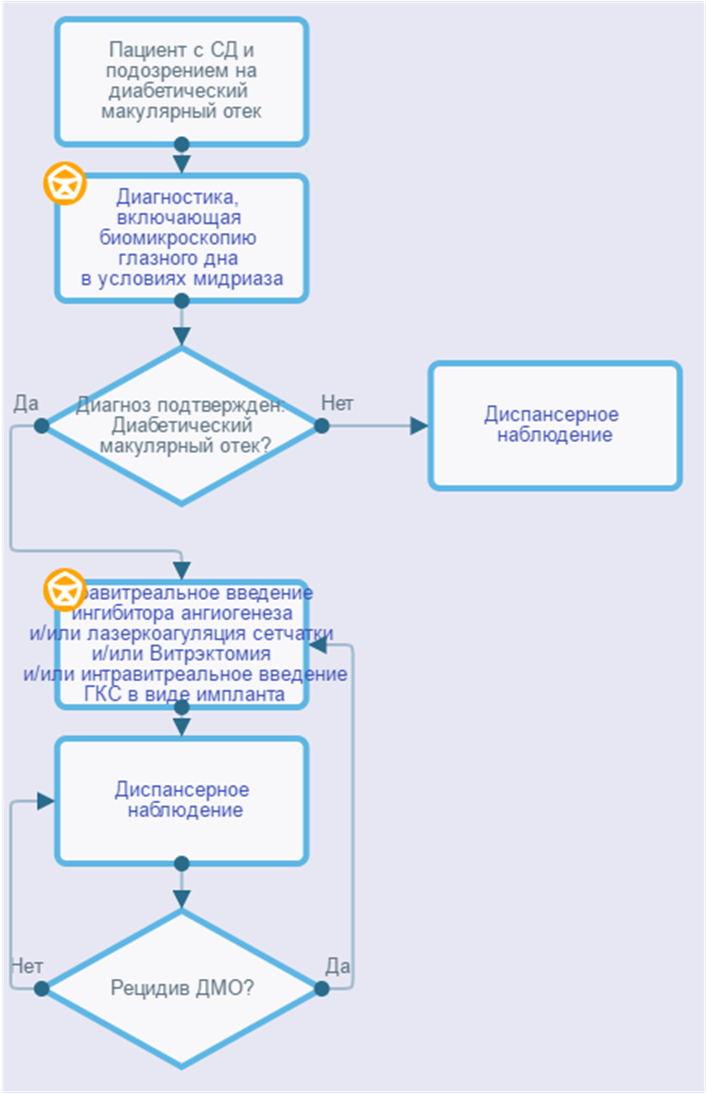
Алгоритмы специализированной медицинской помощи больным сахарным диабетом / Под редакцией И.И. Дедова, М.В. Шестаковой, О.Ю. Сухаревой. – 12-й выпуск. – М.; 2025. doi: https://doi.org/10.14341/DM20255S
Всемирная организация здравоохранения [Internet]. Глобальный доклад по диабету. Женева: Всемирная организация здравоохранения, 2018. 88 с. Лицензия: CC BY-NC-SA 3.0 IGO. Доступ по ссылке: https://apps.who.int/iris/bitstream/handle/10665/275388/9789244565254-rus.pdf
Miller K., Fortun J.A. Diabetic macular edema: current understanding, pharmacologic treatment options and developing therapies // Asia Pac J Ophthalmol. 2018. Vol. 7. No. 1. P. 28–35. DOI: 10.22608/APO.2017529
Romero-Aroca P., Baget-Bernaldiz M., Pareja-Rios A., et al. Diabetic macular edema pathophysiology: vasogenic versus inflammatory // J Diabetes Res. 2016. Vol. 2016. 17 p. DOI: 10.1155/2016/2156273
Haller J.A., Schachat A.P. Update on the pathophysiology, molecular biology, and treatment of macular edema // Advanced studies in ophthalmology. 2007. Vol. 4. No. 7. P. 178–190.
Aiello L.P. Vascular endothelial growth factor and the eye: biochemical mechanisms of action and implications for novel therapies // Ophthalmic Res. 1997. Vol. 29. No. 5. P. 354–362. DOI: 10.1159/000268033
Klein R., Klein B.E., Moss S.E., et al. The Wisconsin Epidemiologic Study of Diabetic Retinopathy: II. Prevalence and risk of diabetic retinopathy when age at diagnosis is less than 30 years // Arch Ophthalmol. 1984. Vol. 102. No. 4. P. 520–526. DOI: 10.1001/archopht.1984.01040030398010
Klein R., Klein B.E., Moss S.E., et al. The Wisconsin Epidemiologic Study of Diabetic Retinopathy: III. Prevalence and risk of diabetic retinopathy when age at diagnosis is 30 or more years // Arch Ophthalmol. 1984. Vol. 102. No. 4. P. 527–532. DOI: 10.1001/archopht.1984.01040030405011
Klein R., Moss S.E., Klein B.E., et al. The Wisconsin Epidemiologic Study of Diabetic Retinopathy: XI. The incidence of macular edema // Ophthalmology. 1989. Vol. 96. No. 10. P. 1501–1510. DOI: 10.1016/s0161-6420(89)32699-6
Здоровье глаз и сахарный диабет. Руководство для медицинских работников. IDF и фонд Фреда Холлоуза. Брюссель, Бельгия. 2017. 40 c. Доступ по ссылке: https://www.idf.org/component/attachments/attachments.html?id=875&task=download
Bourne R.R., Stevens G.A., White R.A., et al. Causes of vision loss worldwide, 1990–2010: a systematic analysis // Lancet Glob Health. 2013. Vol. 1. No. 6. P. e339–349. DOI: 10.1016/S2214-109X(13)70113-X
Липатов Д.В., Викулова О.К., Железнякова А.В., и др. Эпидемиология диабетической ретинопатии в Российской Федерации по данным Федерального регистра пациентов с сахарным диабетом (2013-2016 гг.) // Сахарный диабет. 2018. Т. 21. № 4. С. 230-240. DOI: 10.14341/DM9797
Porta M., Kohner E. M. Screening for diabetic retinopathy in Europe // Diabetic Medicine. 1991. Vol. 8. No. 3. P. 197–198. DOI: 10.1111/j.1464-5491.1991.tb01571.x
Early Treatment Diabetic Retinopathy Study Research Group. Early photocoagulation for diabetic retinopathy. ETDRS report number 9 // Ophthalmology. 1991. Vol. 98. No. 5. P. 766–785. DOI: 10.1016/S0161-6420(13)38011-7
Early Treatment Diabetic Retinopathy Study Research Group. Photocoagulation for diabetic macular edema. Early Treatment Diabetic Retinopathy Study report number 1 // Arch Ophthalmol. 1985. Vol. 103. No. 12. P. 1796–1806. DOI: 10.1001/archopht.1985.01050120030015
Руководство по клинической офтальмологии. Под ред. А.Ф. Бровкиной, Ю.С. Астахова. Москва: Медицинское информационное агентство, 2014. 955 с.
Аветисов С.Э., Егоров Е.А., Мошетова Л.К., Нероев В.В., Тахчиди Х.П. Офтальмология: национальное руководство. 2-е изд. Москва: ГЭОТАР-Медиа, 2018. 904 с.
International Council of Ophthalmology [Internet]. ICO Guidelines for Diabetic Eye Care. 2017. 40 p. [Дата обращения: 23.04.2022] Доступ по ссылке: https://icoph.org/eye-care-delivery/diabetic-eye-care
Нероев В.В., Астахов Ю.С., Коротких С.А., и др. Протокол выполнения интравитреального введения лекарственных препаратов. Консенсус Экспертного совета по заболеваниям сетчатки и зрительного нерва Общероссийской общественной организации «Ассоциация врачей-офтальмологов» // Вестник офтальмологии. 2020. Т. 136. № 6. С.251–263. DOI: 10.17116/oftalma2020136062251.
Flaxel C.J., Adelman R.A., Bailey S.T., et al. Diabetic Retinopathy Preferred Practice Pattern® // Ophthalmology. 2020. Vol. 127. No. 1. P. P66–P145. DOI: 10.1016/j.ophtha.2019.09.025
Санитарно-эпидемиологические правила и нормативы СанПиН 3.3686-21 «Санитарно-эпидемиологические требования по профилактике инфекционных болезней» (постановление Главного государственного санитарного врача РФ от 28.01.2021 г. № 2).
Управление плановой госпитализацией в многопрофильной больнице. Методические рекомендации.- № 2001/144 : (утв. Минздравом РФ 09.11.2001).
До- и послетестовое консультирование как профилактика передачи ВИЧ: Методические рекомендации МР 3.1.5.0076/1-13.- М.: Федеральный центр гигиены и эпидемиологии Роспотребнадзора.- 2014.-26 с.
Shields М.В. Glaucoma in diabetic patients. In: Feman S.S., editor. Ocular problems in diabetes mellitus. Boston: Blackwell Scientific Publications, 1992. P. 307-319.
Virgili G., Menchini F., Casazza G., et al. Optical coherence tomography (OCT) for detection of macular oedema in patients with diabetic retinopathy // Cochrane Database Syst Rev. 2015. No. 1. 57 p. DOI: 10.1002/14651858.CD008081.pub3
Schmidt-Erfurth U., Garcia-Arumi J., Bandello F., et al. Guidelines for the Management of Diabetic Macular Edema by the European Society of Retina Specialists (EURETINA) // Ophthalmologica. 2017. Vol. 237. No. 4. P. 185–222. DOI: 10.1159/000458539
Tey K.Y., Teo K., Tan A.C.S., et al. Optical coherence tomography angiography in diabetic retinopathy: a review of current applications // Eye Vis (Lond). 2019. Vol. 6. No. 37. DOI: 10.1186/s40662-019-0160-3
Johannesen S.K. Viken J.N., Vergmann A.S., Grauslund J., et al. Optical coherence tomography angiography and microvascular changes in diabetic retinopathy: a systematic review // Acta Ophthalmol. 2019. Vol. 97. No. 1. P. 7–14. DOI: 10.1111/aos.13859
Diabetes Control and Complication Trial Research Group. The effect of intensive treatment of diabetes on the development and progression of long-term complication in insulin dependent diabetes mellitus // N Engl J Med. 1993. Vol. 329. No. 14. P. 977–986. DOI: 10.1056/NEJM199309303291401
UK Prospective Diabetes Study Group. Intensive blood-glucose control with sulphonylureas or insulin compared with conventional treatment and risk of complications in patients with type 2 diabetes (UKPDS 33) // Lancet. 1998. Vol. 352. No. 9131. P. 837–853. DOI: 10.1016/S0140-6736(98)07019-6
Diabetes Control and Complication Trial Research Group. The relationship of glycemic exposure (HbA1с) to the risk of development and progression of retinopathy in the diabetes control and complication trial // Diabetes. 1995. Vol. 44. No. 8. P. 968–983. DOI: 10.2337/diab.44.8.968
Stephenson J., Fuller, J.H. & EUROBIAB IDDM Complications Study Group. Microvascular and acute complications in IDDM patients: the EURODIAB IDDM Complications Study // Diabetologia. 1994. Vol. 37. No. 3. P. 278–285. DOI: 10.1007/BF00398055
Stratton I.M., Kohner E.M., Aldington S.J., et al. UKPDS 50: risk factors for incidence and progression of diabetic retinopathy in type II diabetes over 6 years from diagnosis // Diabetologia. 2001. Vol. 44. No. 2. P. 156–163. DOI: 10.1007/s001250051594
Keech A.C., Mitchell P., Summanen P.A., et al. FIELD study investigators. Effect of fenofibrate on the need for laser treatment for diabetic retinopathy (FIELD study): a randomised controlled trial // Lancet. 2007. Vol. 370. No. 9600. P. 1687–1697. DOI: 10.1016/S0140-6736(07)61607-9
Keech A.C. Simes R.J., Barter P., et al. FIELD study investigators. Effect of long-term fenofibrate therapy on cardiovascular events in 9795 people with type 2 diabetes mellitus (the FIELD study): randomised controlled trial // Lancet. 2005. Vol. 366. No. 9500. P. 1849–1861. DOI: 10.1016/S0140-6736(05)67667
ACCORD Study Group; ACCORD Study Eye Group, Chew E.Y., Ambrosius W.T., Davis M.D., et al. Effects of medical therapies on retinopathy progression in type 2 diabetes // N Engl J Med. 2010. Vol. 363. No. 3. P. 233–244. DOI: 10.1056/NEJMoa1001288
The Diabetic Retinopathy Study Research Group. Photocoagulation treatment of proliferative diabetic retinopathy. Clinical application of Diabetic Retinopathy Study (DRS) findings, DRS Report Number 8 // Ophthalmology. 1981. Vol. 88. No. 7. P. 583–600. DOI: 10.1016/S0161-6420(81)34978-1
The Diabetic Retinopathy Study Research Group. Indications for photocoagulation treatment of diabetic retinopathy: Diabetic Retinopathy Study Report no. 14. // Int. Ophthalmol. Clin. 1987. Vol. 27. No. 4. P. 239–252. DOI: 10.1097/00004397-198702740-00004
Evans J.R., Michelessi M., Virgili G. Laser photocoagulation for proliferative diabetic retinopathy // Cochrane Database Syst Rev. 2014. Vol. 2014. No. 11. 47 p. DOI: 10.1002/14651858.CD011234.pub2
Moutray T., Evans J.R., Lois N., et al. Different lasers and techniques for proliferative diabetic retinopathy // Cochrane Database Syst Rev. 2018. Vol. 3. No. 3. 104 p. DOI: 10.1002/14651858.CD012314.pub2
Gross J.G., Glassman A.R., Jampol L.M., et al. Panretinal Photocoagulation vs Intravitreous Ranibizumab for Proliferative Diabetic Retinopathy: A Randomized Clinical Trial // JAMA. 2015. Vol. 314. No. 20. P.2137–2146. DOI: 10.1001/jama.2015.15217
Nguyen Q.D Brown DM, Marcus DM et al. Ranibizumab for diabetic macular edema: Results from 2 phase III randomized trials: RISE and RIDE // Ophthalmology. 2012. Vol. 119. No. 4. P.789–801. DOI: 10.1016/j.ophtha.2011.12.039
Do D.V., Nguyen Q.D., Boyer D., et al. One-year outcomes of the DA Vinci Study of VEGF Trap-Eye in eyes with diabetic macular edema // Ophthalmology. 2012. Vol. 119. No. 8. P. 1658–1665.DOI: 10.1016/j.ophtha.2012.02.010
Brown D.M. Emanuelli A., Bandello F., et al. KESTREL and KITE: 52-week results from two phase III pivotal trials of brolucizumab for diabetic macular edema // Am J Ophthalmol. 2022. Vol. 238. P.157–172. DOI: 10.1016/j.ajo.2022.01.004
Wong T.Y., Haskova Z., Asik K., et al. Faricimab Treat-and-Extend for Diabetic Macular Edema: two-year results from the randomized phase 3 YOSEMITE and RHINE Trials // Ophthalmology. 2024. Vol. 131. No. 6. P. 708–723. DOI: 10.1016/j.ophtha.2023.12.026
Wykoff C.C., Abreu F., Adamis A.P., et al. Efficacy, durability, and safety of intravitreal faricimab with extended dosing up to every 16 weeks in patients with diabetic macular oedema (YOSEMITE and RHINE): two randomised, double-masked, phase 3 trials // Lancet. 2022. Vol. 399. P. 10326. P. 741-755. DOI: 10.1016/S0140-6736(22)00018-6
Pollreisz A., Camino A., Gibson K., et al.; Faster time to retinal fluid control with faricimab versus aflibercept in patients with DME in the phase 3 YOSEMITE/RHINE trials // Invest Ophthalmol Vis Sci. 2023. Vol. 64. No. 8. P. 2817
Goldberg R.A., Kolomeyer A., Nudleman E., et al. Faricimab reduces macular leakage vs aflibercept in patients with DME // Invest Ophthalmol Vis Sci. 2023. Vol. 64. No. 8. P. 2816
Maunz A., von Schulthess E., Patel K.M., et al. Automated segmentation of hyperreflective foci in diabetic macular edema shows greater volume reduction by faricimab vs aflibercept in phase 3 YOSEMITE and RHINE // Invest Ophthalmol Vis Sci. 2023. Vol. 64. No.9. P. PB0039
Jaffe G.J., Ogura Y., Deak G., et al. Impact of faricimab vs aflibercept on epiretinal membrane formation over 2 years in eyes with DME in the YOSEMITE/RHINE phase 3 trials. 2023. Доступ по ссылке: https://medically.gene.com/content/dam/pdmahub/restricted/ophthalmology/asrs-2023/ASRS-2023-presentation-jaffe-impact-of-faricimab-vs-aflibercept.pdf
Takamura Y., Yamada Y., Morioka M., et al. Turnover of microaneurysms after intravitreal injections of faricimab for diabetic macular edema // Invest Ophthalmol Vis Sci. 2023. Vol. 64. No. 13. P. 31. DOI: 10.1167/iovs.64.13.31
Boyer D.S., Yoon Y.H., Belfort R. Jr., et al. Ozurdex MEAD Study Group. Three-year, randomized, sham-controlled trial of dexamethasone intravitreal implant in patients with diabetic macular edema // Ophthalmology. 2014. Vol. 121. No. 10. P. 1904–1914. DOI: 10.1016/j.ophtha.2014.04.024
Elman M.J., Ayala A., Bressler N.M., et al. Diabetic Retinopathy Clinical Research Network. Intravitreal ranibizumab for diabetic macular edema with prompt versus deferred laser treatment: 5-year randomized trial results // Ophthalmology. 2015. Vol. 122. No. 2. P. 375–381. DOI: 10.1016/j.ophtha.2014.08.047
Diabetic Retinopathy Clinical Research Network, Wells J.A., Glassman A.R., Ayala A.R., et al. Aflibercept, bevacizumab, or ranibizumab for diabetic macular edema // N Engl J Med. 2015. Vol. 372. No. 13. P. 1193–1203. DOI: 10.1056/NEJMoa1414264
Wells J.A., Glassman A.R., Ayala A.R., et al. Diabetic Retinopathy Clinical Research Network. Aflibercept, Bevacizumab, or Ranibizumab for Diabetic Macular Edema: Two-Year Results from a Comparative Effectiveness Randomized Clinical Trial // Ophthalmology. 2016. Vol. 123. No. 6. P. 1351–1359. DOI: 10.1016/j.ophtha.2016.02.022
Papadopoulos N., Martin J., Ruan Q., et al. Binding and neutralization of vascular endothelial growth factor (VEGF) and related ligands by VEGF Trap, ranibizumab and bevacizumab // Angiogenesis. 2012. Vol. 15. No. 2. P. 171–185. DOI: 10.1007/s10456-011-9249-6
Prevention of blindness from diabetes mellitus: report of a WHO consultation in Geneva 9-11 November 2005. Switzerland: WHO press, 2005. 39 p.
Massin P., Bandello F., Garweg J.G., et al. Safety and efficacy of ranibizumab in diabetic macular edema (RESOLVE Study): a 12-month, randomized, controlled, double-masked, multicenter phase II study // Diabetes Care. 2010. Vol. 33. No. 11. P. 2399–2405. DOI: 10.2337/dc10-0493
Mitchell P., Bandello F., Schmidt-Erfurth U., et al. RESTORE study group. The RESTORE study: ranibizumab monotherapy or combined with laser versus laser monotherapy for diabetic macular edema // Ophthalmology. 2011. Vol. 118, No. 4. P. 615–625. DOI: 10.1016/j.ophtha.2011.01.031
Do D.V., Schmidt-Erfurth U., Gonzalez V.H., et al. The DA VINCI Study: phase 2 primary results of VEGF Trap-Eye in patients with diabetic macular edema // Ophthalmology. 2011. Vol. 118. P. 1819–1826. DOI: 10.1016/j.ophtha.2011.02.018
Brown D.M., Schmidt-Erfurth U., Do D.V, et al. Intravitreal aflibercept for diabetic macular edema: 100-week results from the VISTA and VIVID studies // Ophthalmology. 2015. Vol. 122. No. 10. P. 2044–2052. DOI: 10.1016/j.ophtha.2015.06.017
Stewart M.W. Aflibercept (VEGF Trap-eye): the newest anti-VEGF drug // Br J Ophthalmol. 2012. Vol. 96. No. 9. P. 1157–1158. DOI: 10.1136/bjophthalmol-2011-300654
Waltl, I., Zehetner, C., Seifarth, C., et al. Effects of Intravitreal Aflibercept on Galectin-1 and Vascular Endothelial Growth Factor-A Plasma Levels in Patients with Diabetic Retinopathy // Curr Eye Res. 2018. Vol. 43. No. 3. P. 368–375. DOI: 10.1080/02713683.2017.1403632
Kaiser P.K., Turner K.C., Bihorel S., et al. Population pharmacokinetic modeling and simulation of ocular clearance for aflibercept 8 mg and 2 mg and association with durability of effect // Invest Ophthalmol Vis Sci. 2024. Vol. 65. No.7. 3154
Korobelnik, J.F., Lanzetta, P., Wykoff, C.C., et al. Sustained disease control with aflibercept 8 mg: a new benchmark in the management of retinal neovascular diseases // Eye. 2024. Vol. 38. No.17. P. 3218–3221. DOI: 10.1038/s41433-024-03312-w
Brown D.M., Boyer D.S., Do D.V., et al. Intravitreal aflibercept 8 mg in diabetic macular oedema (PHOTON): 48-week results from a randomised, double-masked, non-inferiority, phase 2/3 trial // Lancet. 2024. Vol. 403. No. 10432. P. 1153-1163. DOI: 10.1016/S0140-6736(23)02577-1
Elman M.J., Aiello L.P., Beck R.W., et al. Diabetic Retinopathy Clinical Research Network. Randomized trial evaluating ranibizumab plus prompt or deferred laser or triamcinolone plus prompt laser for diabetic macular edema // Ophthalmology. 2010. Vol. 117. No. 6. P. 1064–1077.e35. DOI: 10.1016/j.ophtha.2010.02.031
Callanan D.G. Gupta S, Boyer DS, et al. Ozurdex PLACID Study Group. Dexamethasone intravitreal implant in combination with laser photocoagulation for the treatment of diffuse diabetic macular edema // Ophthalmology. 2013. Vol.120. No. 9. P. 843–851. DOI: 10.1016/j.ophtha.2013.02.018
Haller J.A. Kuppermann B.D., Blumenkranz M.S., et al. Dexamethasone DDS Phase II Study Group. Randomized controlled trial of an intravitreous dexamethasone drug delivery system in patients with diabetic macular edema // Arch Ophthalmol. 2010. Vol. 128. No. 3. P. 289–296. DOI: 10.1001/archophthalmol.2010.21
Giovannini A., Parravano M., Ricci F., Bandello F. Management of diabetic macular edema with intravitreal dexamethasone implants: Expert recommendations using a Delphi-based approach // Eur J Ophthalmol. 2019. Vol. 29. No. 1. P. 82–91. DOI: 10.1177/1120672118781236
Forooghian F., Albiani D.A., Kirker A.W., Merkur A.B. Comparison of endophthalmitis rates following intravitreal injection of compounded bevacizumab, ranibizumab, and aflibercept // Can J Ophthalmol. 2017. Vol. 52. No. 6. P. 616–619. DOI: 10.1016/j.jcjo.2017.04.016
Бойко Э.В., Даниличев В.Ф., Сажин Т.Г. и др. Методы клинического применения рекомбинантной проурокиназы в офтальмологической практике // РМЖ. Клиническая офтальмология. 2017. Т. 18. № 2. С. 118–129. DOI: 10.21689/2311-7729-2017-17-2-118-129
Flynn H.W. Jr., Chew E.Y., Simons B.D., et al. Pars plana vitrectomy in the Early Treatment Diabetic Retinopathy Study. ETDRS report number 17. The Early Treatment Diabetic Retinopathy Study research group // Ophthalmology. 1992. Vol. 99. No. 9. P. 1351–1357. DOI: 10.1016/s0161-6420(92)31779-8
Early vitrectomy for severe proliferative diabetic retinopathy in eyes with useful vision. Clinical application of results of a randomized trial – Diabetic Retinopathy Vitrectomy Study report 4. The Diabetic Retinopathy Vitrectomy Study Research Group // Ophthalmology. 1988. Vol. 95. No. 10. P.1321–1334. DOI: 10.1016/s0161-6420(88)33014-9
Херш П.С. Офтальмохирургия / П.С. Херш, Б.М. Загельбаум, С.Л. Кремерс. Москва: Медицинская литература, 2016. 400 с.
Tsui M.C., Hsieh Y.T., Yang C.M. Silicone oil removal after extended tamponade in proliferative diabetic retinopathy – long range of follow-up // Eye. 2020. Vol. 34. No. 12. P. 2307–2314. DOI: 10.1038/s41433-020-0815-2
Villegas V.M., González M.P., Berrocal A.M., Murray T.G. Pharmacotherapy as an adjunct to vitrectomy // Ther Adv Ophthalmol. 2021. Vol. 13. DOI: 10.1177/25158414211016105
Kudasiewicz-Kardaszewska A.J., Ozimek M.A., Kardaszewska A., et al. Modern Endophthalmitis Control: The Complete Early Vitrectomy for Endophthalmitis (CEVE) Protocol and Surgical Prophylaxis // Cureus. 2025. Vol. 17. No. 9. e91513. DOI: 10.7759/cureus.91513
Laurenzi A., Bolla A.M., Panigoni G., et al. Effects of carbohydrate counting on glucose control and quality of life over 24 weeks in adult patients with type 1 diabetes on continuous subcutaneous insulin infusion: A randomized, prospective clinical trial (GIOCAR) // Diabetes Care. 2011. Vol. 34. No. 4. P. 823–827. DOI: 10.2337/dc10-1490
Sämann A., Mühlhauser I., Bender R., et al. Glycaemic control and severe hypoglycaemia following training in flexible, intensive insulin therapy to enable dietary freedom in people with type 1 diabetes: a prospective implementation study // Diabetologia. 2005. Vol. 48. No. 10. P. 1965–1970. DOI: 10.1007/s00125-005-1905-1
Bell K.J., Barclay A.W., Petocz P., et al. Efficacy of carbohydrate counting in type 1 diabetes: a systematic review and meta-analysis // Lancet Diabetes Endocrinol. 2014. Vol. 2. No. 2. P. 133–140. DOI: 10.1016/S2213-8587(13)70144-X
Elliott J., Lawton J., Rankin D., et al. The 5x1 DAFNE study protocol: a cluster randomised trial comparing a standard 5 day DAFNE course delivered over 1 week against DAFNE training delivered over 1 day a week for 5 consecutive weeks // BMC Endocr Disord. 2012. Vol. 12. No. 28. DOI: 10.1186/1472-6823-12-28
Haas L., Maryniuk M., Beck J., et al. National standards for diabetes self-management education and support // Diabetes Care. 2013. Vol. 36. Suppl. 1. P. S100–S108. DOI: 10.2337/dc13-S100
Evert A.B., Boucher J.L., Cypress M., et al. Nutrition therapy recommendations for the management of adults with diabetes // Diabetes Care. 2014. Vol. 37. Suppl. 1. P. S120–S143. DOI: 10.2337/dc14-S120
Davies M.J., D’Alessio D.A., Fradkin J., et al. Management of hyperglycemia in type 2 diabetes, 2018. A Consensus Report by the American Diabetes Association (ADA) and the European Association for the Study of Diabetes (EASD) // Diabetes Care. 2018. Vol. 41. No. 12. P. 2669–2701. DOI: 10.2337/dci18-0033
Diabetes Control and Complications Trial Research Group, Nathan D.M., Genuth S., Lachin J., et al. The effect of intensive treatment of diabetes on the development and progression of long-term complications in insulin-dependent diabetes mellitus. N Engl J Med. 1993. Vol. 329. No. 14. P. 977–986. DOI: 10.1056/NEJM199309303291401.
Diabetes Control and Complications Trial/Epidemiology of Diabetes Interventions and Complications Research Group, Lachin J.M., Genuth S., Cleary P., et al. Retinopathy and nephropathy in patients with type 1 diabetes four years after a trial of intensive therapy // N Engl J Med. 2000. Vol. 342. No. 6. P. 381–389. DOI: 10.1056/NEJM200002103420603
American Diabetes Association. 6. Glycemic Targets: Standards of Medical Care in Diabetes – 2019 // Diabetes Care. 2019. Vol. 42. Suppl. 1. P. S61–S70. DOI: 10.2337/dc19-S006
UK Prospective Diabetes Study (UKPDS) Group. Effect of intensive blood-glucose control with metformin on complications in overweight patients with type 2 diabetes (UKPDS 34) // Lancet. 1998. Vol.352. No. 9131. P. 854–865. DOI: 10.1016/S0140-6736(98)07037-8
UK Prospective Diabetes Study (UKPDS) Group. Intensive blood-glucose control with sulphonylureas or insulin compared with conventional treatment and risk of complications in patients with type 2 diabetes (UKPDS 33) // Lancet. 1998. Vol. 352. No. 9131. P. 837–853. DOI: 10.1016/S0140-6736(98)07019-6
Action to Control Cardiovascular Risk in Diabetes Study Group, Gerstein H.C., Miller M.E., Byington R.P., et al. Effects of intensive glucose lowering in type 2 diabetes // N Engl J Med. 2008. Vol. 358. No. 24. P. 2545–2559. DOI: 10.1056/NEJMoa0802743
Duckworth W., Abraira C., Moritz T., et al. Glucose control and vascular complications in veterans with type 2 diabetes // N Engl J Med. 2009. Vol. 360. No. 2. P. 129–139. DOI: 10.1056/NEJMoa0808431
ADVANCE Collaborative Group, Patel A., MacMahon S., Chalmers J., et al. Intensive blood glucose control and vascular outcomes in patients with type 2 diabetes // N Engl J Med. 2008. Vol. 358. No. 24. P. 2560–2572. DOI: 10.1056/NEJMoa0802987
Skyler J.S., Bergenstal R., Bonow R.O., et al. Intensive glycemic control and the prevention of cardiovascular events: implications of the ACCORD, ADVANCE, and VA Diabetes Trials: a position statement of the American Diabetes Association and a scientific statement of the American College of Cardiology Foundation and the American Heart Association // Diabetes Care. 2009. Vol. 32. No. 1. P. 187–192. DOI: 10.2337/dc08- 9026
Дедов И.И., Шестакова М.В., Аметов А.С., и др. Консенсус совета экспертов Российской ассоциации эндокринологов по инициации и интенсификации сахароснижающей терапии у больных сахарным диабетом 2 типа // Сахарный диабет. 2011. Т. 14. № 4. С. 6–17. DOI: 10.14341/2072-0351-5810
Inzucchi S.E, Bergenstal R.M., Buse J.B., et al. Management of hyperglycaemia in type 2 diabetes: a patient-centered approach. Position statement of the American Diabetes Association (ADA) and the European Association for the Study of Diabetes (EASD) // Diabetologia. 2012. Vol. 55. No. 6. P. 1577–1596. DOI: 10.1007/s00125-012-2534-0
Action to Control Cardiovascular Risk in Diabetes Follow-On (ACCORDION) Eye Study Group and the Action to Control Cardiovascular Risk in Diabetes Follow-On (ACCORDION) Study Group. Persistent Effects of Intensive Glycemic Control on Retinopathy in Type 2 Diabetes in the Action to Control Cardiovascular Risk in Diabetes (ACCORD) Follow-On Study // Diabetes Care. 2016. Vol. 39. No. 7. P. 1089–1100. DOI: 10.2337/dc16-0024
Nathan D.M., Kuenen J., Borg R., et al. Translating the A1C assay into estimated average glucose values // Diabetes Care. 2008. Vol. 31. No. 8. P. 1473–1478. DOI: 10.2337/dc08-0545
Fisher M. Statins for people with type 1 diabetes: when should treatment start? // Pract Diabetes. 2016. Vol. 33. No. 1. P. 10–11. DOI: 10.1002/pdi.1990
Cholesterol Treatment Trialists’ (CTT) Collaborators, Kearney P.M., Blackwell L., Collins R., et al. Efficacy of cholesterol-lowering therapy in 18,686 people with diabetes in 14 randomised trials of statins: a meta-analysis // Lancet. 2008. Vol. 371. No. 9607. P. 117–125. DOI: 10.1016/S0140-6736(08)60104-X
Rabar S., Harker M., O’Flynn N., Wierzbicki A.S. Lipid modification and cardiovascular risk assessment for the primary and secondary prevention of cardiovascular disease: summary of updated NICE guidance // BMJ. 2014. Vol. 349. g4356. DOI: 10.1136/bmj.g4356
Livingstone S.J., Looker H.C., Hothersall E.J., et al. Risk of Cardiovascular Disease and Total Mortality in Adults with Type 1 Diabetes: Scottish Registry Linkage Study // PLoS Med. 2012. Vol. 9. No. 10. e1001321. DOI: 10.1371/journal.pmed.1001321
Heart Protection Study Collaborative Group. MRC/BHF Heart Protection Study of cholesterol lowering with simvastatin in 20,536 high-risk individuals: a randomised placebo-controlled trial // Lancet. 2002. Vol. 360. No. 9326. P. 7–22. DOI: 10.1016/S0140-6736(02)09327-3
Cosentino F., Grant P.J, Aboyans V., et al. 2019 ESC Guidelines on diabetes, pre-diabetes, and cardiovascular diseases developed in collaboration with the EASD // Eur Heart J. 2020. Vol. 41. No. 2. P. 255-323. DOI: 10.1093/eurheartj/ehz486
Hansen T.W., Kikuya M., Thijs L., et al. Diagnostic thresholds for ambulatory blood pressure moving lower: a review based on a meta-analysis-clinical implications // J Clin Hypertens (Greenwich). 2008. Vol. 10. No. 5. P. 377–381. DOI:10.1111/j.1751‑7176.2008.07681.x
Arguedas J.A., Leiva V., Wright J.M. Blood pressure targets for hypertension in people with diabetes mellitus // Cochrane Database Syst Rev. 2013. No. 10. CD008277. 35 p. DOI: 10.1002/14651858 .CD008277.pub2
Thomopoulos C., Parati G., Zanchetti A. Effects of blood-pressure-lowering treatment on outcome incidence in hypertension. 10 - Should blood pressure management differ in hypertensive patients with and without diabetes mellitus? Overview and meta-analyses of randomized trials // J Hypertens. 2017. Vol. 35. No. 5. P. 922–944. DOI: 10.1097/HJH.0000000000001276
Bulugahapitiya U., Siyambalapitiya S., Sithole J., Idris I. Is diabetes a coronary risk equivalent? Systematic review and meta-analysis // Diabet Med. 2009. Vol. 26. No. 2. P. 142–148. DOI: 10.1111/j.1464-5491.2008.02640.x
Brunström M., Carlberg B. Effect of antihypertensive treatment at different blood pressure levels in patients with diabetes mellitus: systematic review and meta-analyses // BMJ. 2016. Vol. 352. i717. DOI: 10.1136/bmj.i717
Rawshani A., Rawshani A., Franzén S., et al. Range of Risk Factor Levels: Control, Mortality, and Cardiovascular Outcomes in Type 1 Diabetes Mellitus // Circulation. 2017. Vol. 135. No. 16. P. 1522–1531. DOI: 10.1161/CIRCULATIONAHA.116.025961
Xie X., Atkins E., Lv J., et al. Effects of intensive blood pressure lowering on cardiovascular and renal outcomes: updated systematic review and meta-analysis // Lancet. 2016. Vol. 387. No. 10017. P. 435–443. DOI: 10.1016/S0140-6736(15)00805-3
Colhoun H.M., Betteridge D.J., Durrington P.N., et al. Primary prevention of cardiovascular disease with atorvastatin in type 2 diabetes in the Collaborative Atorvastatin Diabetes Study (CARDS): multicentre randomized placebo-controlled trial // Lancet. 2004. Vol. 364. No. 9435. P. 685–696. DOI: 10.1016/S0140-6736(04)16895-5
Baigent C., Keech A., Kearney P.M., et al. Efficacy and safety of cholesterol-lowering treatment:prospective meta-analysis of data from 90,056 participants in 14 randomised trials of statins // Lancet. 2005. Vol. 366. No. 9493. P. 1267–1278. DOI: 10.1016/S0140‑6736(05)67394-1
Catapano A.L., Graham I., De Backer G., et al. 2016 ESC/EAS Guidelines for the Management of Dyslipidaemias // Eur Heart J. 2016. Vol. 37. No. 39. P. 2999–3058. DOI: 10.1093/eurheartj/ehw272
Grundy S.M., Stone N.J., Bailey A.L., et al. 2018 AHA/ACC/ AACVPR/AAPA/ABC/ACPM/ADA/AGS/APhA/ASPC/NLA/PCNA Guideline on the Management of Blood Cholesterol: A Report of the American College of Cardiology/American Heart Association Task Force on Clinical Practice Guidelines // J Am Coll Cardiol. 2019. Vol. 73. No. 24. P. e285–e350. DOI: 10.1016/j.jacc.2018.11.003
Cholesterol Treatment Trialists’ (CTT) Collaboration, Fulcher J., O’Connell R., Voysey M., et al. Efficacy and safety of LDL-lowering therapy among men and women: meta‑analysis of individual data from 174,000 participants in 27 randomised trials // Lancet. 2015. Vol. 385. No. 9976. P. 1397–1405. DOI: 10.1016/S0140-6736(14)61368-4
Cholesterol Treatment Trialists’ (CTT) Collaboration, Baigent C., Blackwell L., Emberson J., et al. Efficacy and safety of more intensive lowering of LDL cholesterol: a meta-analysis of data from 170,000 participants in 26 randomised trials // Lancet. 2010. Vol. 376. No. 9753. P. 1670–1681. DOI: 10.1016/S0140-6736(10)61350-5
ONTARGET Investigators, Yusuf S., Teo K.K., Pogue J., et al. Telmisartan, ramipril, or both in patients at high risk for vascular events // N Engl J Med. 2008. Vol. 358. No. 15. P. 1547–1559. DOI: 10.1056/NEJMoa0801317
Grenier J., Goodman S.G., Leiter L.A., et al. Blood Pressure Management in Adults With Type 2 Diabetes: Insights From the Diabetes Mellitus Status in Canada (DM-SCAN) Survey // Can J Diabetes. 2018. Vol. 42. No. 2. P. 130–137. DOI: 10.1016/j.jcjd.2017.01.005
ACCORD Study Group, Cushman W.C., Evans G.W., Byington R.P., et al. Effects of intensive blood-pressure control in type 2 diabetes mellitus // N Engl J Med. 2010. Vol. 362. No. 17. P. 1575–1585. DOI: 10.1056/NEJMoa1001286
Solomon S.D., Chew E., Duh E.J., et al. Diabetic Retinopathy: A Position Statement by American Diabetes Association // Diabetes Care. 2017. Vol. 40. No. 3. P. 412-418. DOI: 10.2337/dc16-2641
Canadian Ophthalmological Society Diabetic Retinopathy Clinical Practice Guideline Expert Committee, Hooper P., Boucher M.C., Cruess A., et al. Canadian Ophthalmological Society evidence-based clinical practice guidelines for the management of diabetic retinopathy – executive summary // Can J Ophthalmol. 2012. Vol. 47. No. 2. P. 91-96. DOI: 10.1016/j.jcjo.2012.01.022
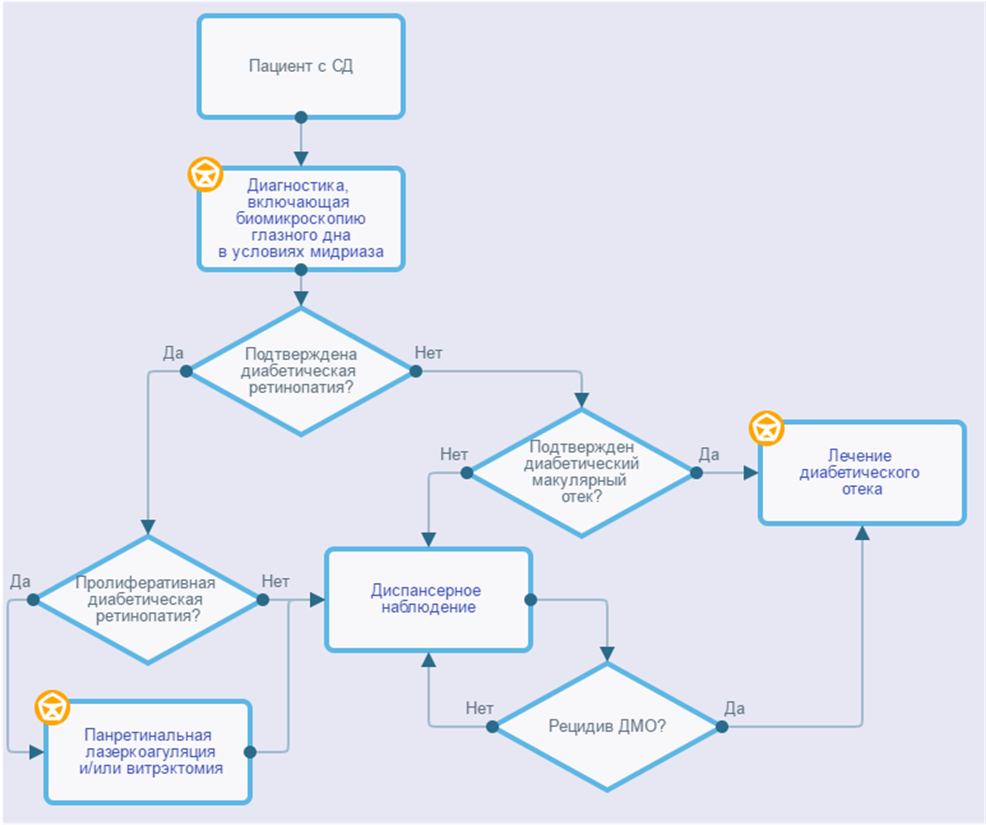 Диабетический макулярный отек